
Showing posts with label South Asian. Show all posts


This week we celebrate Eid-ul-Adha - the Feast of The Sacrifice - also known Bakri Eid where I come from. (Bakri is the word for goat in several South Asian languages.)
It is a celebration with ancient Abrahamic roots and commemorates the scriptural episode known as The Sacrifice of Ibrahim/Abraham. 
Typically a family with sufficient means leads a fatted goat or ram to the slaughter. For those who observe the tradition, the meat is ideally then shared: a 3rd for one's own family, a third for friends and relatives and a 3rd for the poor.  The mood of this year's celebration will no doubt be tempered by the tragic Haj stampede on the outskirts of Mecca, and our thoughts go out to those who have lost someone dear to them. 
Still,  for the vast majority of Muslims around the world, the celebration will take place as it always does. Families will gather for the traditional prayers, followed by the traditional feasting. As with most celebrations, food is at the centre of it all, and the food at the centre is likely to be goat.
Food is at the centre of it all, and the food at the centre is likely to be goat.
It's a very big deal if you're in the grocery business, like our client, Sobeys. Billions of dollars are spent globally at this time. In Pakistan, an estimated US$3bn is spent each Bakri Eid on some 10 million livestock.
What of Canada? Well, Canada's Muslim population grew some 82% over the last decade. The Value Chain Management Centre, in a 2011 paper examining the challenges and opportunities for Canada's specialty food market, reported an extraordinary concentration: 59% of Canada's Muslims live in Toronto and Mississauga. A 2009 study estimated the Canadian domestic halal meat market at C$214 million annually. Muslims households were found to spend C$31 per week on (halal) meat products, almost double the non-Muslim Canadian household weekly average of C$17. In 2014, the Ministry of Agriculture noted that the size of the Canadian halal food market had reached $1bn in an amendment to the Food and Drug Regulations that promoted clearer halal labelling.  
This is big business. This is big business for the foreseeable future.
This is big business. This is big business for the foreseeable future. It's my hope that Chalo FreshCo, the store we helped Sobeys brand and launch, will achieve record-breaking sales over these days.
Which is why our multicultural wish for Eid-ul-Adha comes with smile included - a smile for all but the unfortunate goat.
A small sacrifice for a great biryani.
Eid Mubarak to those celebrating.
Gavin Barrett is Ideawallah at Barrett and Welsh, a Toronto agency that specializes in the new Canada, a magical place where all cultures are understood, shared and enjoyed and the ideas are delicious, meaty and aromatic with spices.


Tesco makes a generous donation to our library of multicultural mistakes, with this Ramadan blunder: bacon flavoured chips on a stand with the message Ramadan Mubarak.

The scene of the marketing crime? The Tesco store on Liverpool Street in London, not far from Whitechapel's East London Mosque, one of the largest Muslim places of worship in Europe. An amused Muslim shopper saw the stand and tweeted it and it quickly rippled through the twitterverse, before the chips were moved.

Who moved the Pringles? Tesco. To their credit they acknowledged their mistake and issued a statement:

We are proud to offer a wide range of meals and products to meet the needs of our customers during Ramadan. We recognise these Pringles weren’t in the most suitable place and our store colleagues have now moved them.

As I've commented elsewhere before, marketing and advertising are all about perception and persuasion. Consumer opinion both reflects and affects brand perception.

Interestingly, some of the reaction in marketing circles has been less on the mark than Tesco's.

One media professional defended the mistake saying "if you walk down to any large Tesco you will be surprised to see the number of Muslims picking up this product" - a classic reactive defence based on anecdotal evidence.

We have to be cautious with such evidence when acting as professional counsel to our clients. I have observed some of my (devout but heterodox) Muslim friends indulge in a dram of Scotch from time to time, but it would be an act of insanity for me to recommend to an alcohol client that she begin advertising Eid specials on Scotch based on my observation.

Another commenter observed, "I believe you are from India" and reminded me that there are Muslims there who sell alcohol during Ramadan.

Yes, I am from India, but my knowledge of the actions of individual Muslims cannot be used to explain away a marketing error. Marketing for the most part is a social-risk-averse, share-building discipline in which marketers tend not to risk slim brand marketing budgets on the behaviour of the individual, but rather to invest on the preferences of majorities so as to achieve success on a scale shareholders can go out to dinner on.

Niche brands - like hedge funds - often swim the other way but it is rare for a large brand to do such a thing. When it happens, without all the accompanying fanfare, one can be relatively certain it was a mistake. I'm no fan of political correctness in a conversation, but would think it horrifying in our times, if a brand were to use that to excuse the ignorance, laziness or negligence that produced a racist or sexist advertising message.

Our business is all about influencing consumer perception positively.

This focus is often lost in these days of mindless network ad distribution and aggregation, when the motto seems to be "anything goes as long as it goes everywhere" – placing a premium on efficiency of distribution over the effectiveness of the message distributed.

In reality, the wrong ad placed in the wrong medium or the wrong product placed on the wrong shelf could easily leave a bad taste in the mouth.

This is surely not something Tesco intended. A single act of thoughtless product selection on its part resulted in it knocking over its own well-meant Ramadan display.

Tesco's Pringles mistake was neither racist or sexist - it was just dumb - and, I believe, just a mistake.

Like selling combs to bald men. Yes, there will always be a few vain men who buy combs for that single lonely strand they nurse. But most bald men will either treat the message like unaddressed mail or feel insulted by its utter thoughtlessness.

Neither response is the desired response.


------

Gavin Barrett is Ideawallah at Barrett and Welsh, a Toronto agency that specializes in the new Canada, a magical place where all cultures are understood, shared and enjoyed.


In March 2013, David Brown who is Managing Editor at Marketing Magazine asked me to write an article about the best multicultural advertising in the world - or to put it more simply, the best advertising in the world.

I said yes, of course, sensing an opportunity to let loose one of my favourite rants. You see, audiences exposed to advertising of Cannes-dominating stature in their home countries immigrate to Canada only to discover that they are being addressed like idiots. (If immigrants were so stupid, why would they have picked Canada?) And do marketers imagine that immigrants from the largest television and online media consumption markets in the world don’t notice their lack of commitment to connect with them in those media here — or the substandard, step-sisterly low-budget production values when they do? Etc etc.

Well, I worked myself up into a pretty lather. Probably as close as I will ever come to being the man your man wants to be aka Isaiah Mustafa.

Anyway, here's a link to the full article, on Marketing Magazine's website.
Enjoy.

And if you like to see how we carry the torch for intelligent multicultural creative here in Canada, click here to view our multicultural work on our website.

Peace.


For S Asians, bragging rights around the joy of travel are directly connected to the sights and sounds of home and family.
We tap into this visceral connection with "home" in our latest spot - for TD Visa First Class.

The team:
Client: Graham Robertson, Anne Kerekes, TD Canada Trust
Agency: Barrett and Welsh

Creative Directors: Mike Welsh and Gavin Barrett
Writer: Gavin Barrett
Art Director: Bhupesh Luther/Gavin Barrett

Directed by: Richard Picton
Producers: Augusta Brook/Wendy Errington
Agency Production Coordinator: Tina Chan

Editor: Chris Brook

Music/Sound Design: Mark Dwyer, Zoo Music
Sound Engineer: John "Wheels" Hurlibut

DOP: Johnny Askwith
Studio: Deb Cochrane
Motion graphics: Alwyn Pereira


TD Canada Trust continues to make Canadian South Asians feel welcome, as our latest spot for them shows.

The premise here is equally simple and incredibly relevant - i.e. TD makes mortgages comfortable, desi style. Instead of the anxiety of negotiating your first Canadian mortgage in a completely unfamiliar setting, TD's mortgage process makes you feel at home. With mortgage specialists who come to you, who get you, who speak the same language as you figuratively and literally.

It's one reason why the majority of desis bank with TD: TD makes mortgages comfortable, desi style.

This idea is demonstrative - TD is not just saying "we get you" it is showing it, in the ad.
(Desi = a person of Indian extraction)


The team:
Client: TD Canada Trust
Agency: Barrett and Welsh

Creative Directors: Mike Welsh and Gavin Barrett
Writer: Gavin Barrett
Art Director: Bhupesh Luther/Gavin Barrett

Directed by: Richard Picton
Executive Producer: Augusta Brook

Editor: Chris Brook
DOP/Colour: Johnny Askwith
Motion graphics: Alwyn Pereira

Music: Night in Lenasia by Deepak Ram, Golden Horn Productions
Sound design: WantedSP, Toronto


I am going to break an longstanding rule of mine and post 2 commercials made by Barrett and Welsh - in a row. The reason? They're good. And they represent a substantial commitment to the South Asian community in Canada by TD Canada Trust. The first spot is called A Longer Hours People.

What's the idea here? Well, everything is longer for South Asians.
Weddings last a week. Festivals are celebrated over several days.
Bollywood movies last three hours.
Even our favourite sport, cricket, is played over five days.
Since time immemorial, our customs, traditions, passions, work ethics, faith and values have driven us to rise earlier and to stay awake later.

South Asians are a longer hours people. And the longer banking hours that TD keeps are a perfect fit, as this commercial demonstrates.


The team:
Client: TD Canada Trust
Agency: Barrett and Welsh

Creative Directors: Mike Welsh and Gavin Barrett
Writer: Gavin Barrett
Art Director: Bhupesh Luther

Produced by Barrett and Welsh, freelance producer: Munaf Husain/Dancing Light Pictures

Editor: Chris Brook
Music: Night in Lenasia by Deepak Ram, Golden Horn Productions
Sound design: Mark Dwyer, Zoo Music, Toronto
DOP/Colour: Pasha Patriki
Motion graphics: Alwyn Pereira
Stock: Getty Images


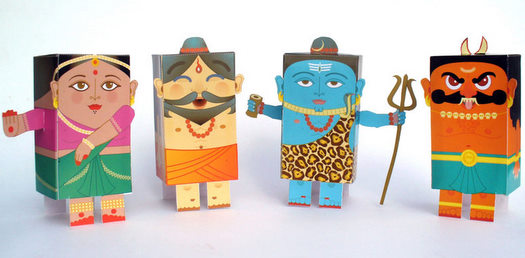
Smart, hip and desi, Masala Chai is a steaming cup filled with desi design wit. Check it out. Posts range from an intro to the stellar fold-your-own paper dolls of Mira Malhotra (shown here) to the Madhubani-folk-art-inspired paintings of Arti Sandhu. Respect.


India just celebrated the incredible, colourful, uninhibited festival of Holi. Enjoy the The Boston Globe's photo essay on the festivities from its spectacular Big Picture website. And in the words of one billion revelers, "Holi Hai!"

Let go and let yourself have some fun.
Click here to see the photo feature.


Image: Makks2010 via weblink to from Wikimedia Commobes

Article: Creative Commons License 2008 Gavin Barrett
This article is licensed under a Creative Commons Attribution-Noncommercial 2.5 Canada License.
Over on LinkedIn, a fellow member posted this question, and the answer I sent in might be pertinent to followers of this blog.

His question on Multicultural Agencies:
Does anyone have any experience working with (as a client) full service multicultural advertising agencies? What was your over-all experience? What were they good at? What were they not so good at? Any thoughts about how the over-all experience of engaging a multicultural agency could have been better?

My answer:
I am a principal/Creative Director at a very successful multicultural agency in Canada - one that is also a mainstream agency. Naturally I approach your questions with a somewhat different lens.

The development of multicultural work is fraught with difficulties.

I find too many multicultural agencies don't dive deep enough into the traditional rigour of good advertising and marketing practice to create insight-based work that is persuasive, engaging and relevant. The result, often, is work that is only one level above mere translation - with just a glimmer or two of culture sensitivity to justify its existence.

At the same time I can't exactly blame the agencies - clients too often want one-off ads - a token nod at the need to have something running in the multicultural market so that they are not conspicuous by their absence.

Operationally, clients frequently assign junior marketing staff to handle multicultural marketing functions independently without the guidance and steadying experience of senior marketers. Imagine how frustrating this can be.

One thing to be cautious of, is agencies that pretend to be more than they are. Hispanic agencies who swear that they can manage Asian American markets without an issue - or vice versa. Chinese market agencies who say they can handle South Asian markets - or vice versa. There are some that do, but these are few and far apart.

I would say to you that you should expect the same things from your multicultural agency as from your mainstream agency. Work of the highest strategic and creative quality for your market. People you can enjoy working with and can trust to deliver.

I would challenge you to provide the same things to your multicultural agency as you do your mainstream agency. Great, disciplined marketing briefs, the involvement and interest of senior marketing management, and the same respect for the process you give mainstream work.


Article: Creative Commons License 2008 Gavin Barrett
This work is licensed under a Creative Commons Attribution-Noncommercial 2.5 Canada License.


Asian American is a catch-all phrase that covers Americans whose origins are East Asian (Chinese, Japanese, Korean), South Asian (mostly Indian, and to a lesser extent Pakistani and Bangladeshi), South-East Asian (Vietnamese and Philipino, and to a lesser extent Thai, Malaysians, Indonesian, Cambodian and Laotian). The idealized definition, would simply be all Americans of Asian origin.

However (and rather interestingly), West Asians (Turkish, Persian and Arabic-speaking peoples), are not typically included in this group, in popular usage. (Perhaps it's not that catch-all in the end?)

The phrase Asian American enjoys preferred use by the US multicultural marketing industry, which tends to use it to separate and simplify the two main multicultural markets thus: Hispanic and Asian American. In Canada, where the Hispanic market is still relatively small, and where familiarity with the disparities between the various Asian ethnicities is high, there is no such grouping; the closest would be the term visible minority.

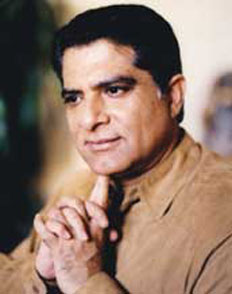
Some famous Asian Americans (ethnic origin in parentheses) are: Governor Bobby Jindal (Indian), Yahoo founder Jerry Yang (Chinese), NBC news anchor Connie Chung (Chinese), Dr. Deepak Chopra (Indian).

Deepak Chopra image, via nndb.com
Jerry Yang image, via businessweek.com

Article: Creative Commons License 2008 Gavin Barrett
This work is licensed under a Creative Commons Attribution-Noncommercial 2.5 Canada License.
East Indian

This extremely irritating (to Indians) term was in common use in Canada and in North America as recently as 1996.
It has fallen into relative disuse but still pops up disconcertingly, from time to time in newspapers or government documents. Its connections to the East India Company's bloody sojourn in India and its direct descent from the world's greatest case of mistaken identity (Columbus declaring his discovery of the Indies) make it unpalatable to the Indian tongue.
Acceptable alternatives are Indo-Canadian or Canadian of Indian origin - if the person or persons described originated from India. The term South Asian is also acceptable though it does not denote Indians exclusively.


Article: Creative Commons License 2008 Gavin Barrett

Creative Commons License


This work is licensed under a Creative Commons Attribution-Noncommercial 2.5 Canada License.
Is multicultural creative getting better?
Or is it merely going downhill fast?
This new commercial for Nationwide Insurance aimed at South Asians in the US is simply not good enough.


Indian English is English with a smattering of Hindustani - and other Indian languages - as the need of the speaker demands.

Hinglish is Hindustani (itself a hybrid of Hindi and Urdu) with a smattering of English.

That's my preferred distinction, and it's the one the Oxford Dictionary folks used to prefer.

It dismays me no end to hear the two used interchangeably, so here is an additional guide.

Indian English is India's English - the Maharani's English if you will. An exotic, richly spiced vibrant variant of the mother form, Indian English is recognized by the Oxford Dictionary. Populated as it is with an aromatic vocabulary of Indian words and quaint, rare and uniquely subcontinental English usage, it is to English what Masala Chai is to tea.

Hinglish on the other hand, being predominantly Hindustani, would be perfectly sensible if written in Devanagari script though it never is. Its quirkiest idiosyncrasy - its defining characteristic - is that it is at heart, an Indian language written fully in Roman script.

Indian English for its part, is mostly English in vocabulary and grammar albeit in a form not always recognizable to Her Majesty.
Imagine this: it's 1936, and a visiting Home Office envoy extends his pinkie, sips his Earl Grey and complains in a tone of mild horror, "My dear boy, it came here as the Queen's English but it's gone dreadfully native, hasn't it?"
Well, the reality is that it has gone wonderfully native; polyglottal India has made Indian English a truly Indian form of self-expression.
Yet, it would be nigh impossible to write Indian English in anything but Roman script.
Indian English is one of the many reasons English can claim more than half a billion speakers.

Here's a line in Indian English.
Hello sir! How is your health keeping? Auntyji is also being okay?


Here's the same line in Hinglish:
Namasteji. Aap teek hain? Aur auntyji?

For a fascinating linguistic journey through this young, extremely dynamic variant of English, click on the links below and hold on to your topees. (And at some point I promise, I will write a post on Indian words that English borrowed - hold on to your pyjamas for that one).

Click here to enjoy the BBC's take on Indian English.

Or here to read a rather thorough linguistic analysis in Wikipedia.

Or enjoy perusing the entertaining Dictionary of Indian English here.

Image via desicreative, by typographer Nabina Ghosh.

Article: Creative Commons License 2008 Gavin Barrett

Creative Commons License


This work is licensed under a Creative Commons Attribution-Noncommercial 2.5 Canada License.


Many people mistakenly use Hinglish as synonymous with Indian English - but like others who approach this linguistically I beg to differ.

There are many different descriptions for this hybridized language. This is mine - as a student and teacher of literature and language (especially in the subcontinental context), I feel compelled to take a more formal approach.

Hinglish is predominantly Hindi or Hindustani written in Roman or English script. When spoken or written, it is driven by phrasings and constructions written or driven by Hindi.


A paragraph of text written in Hinglish may be peppered with English words - especially such terms or concepts as "mobile" or "weekend" or "internet" - in this it does have commonalities with Indian English but the dominant Hindi movie titles are typically written in Hinglish - as in the example shown here. Hinglish and Indian English are both commonly used in advertising in India.

But for obvious reasons (its Indo-Aryan Hindi origins, Hinglish simply doesn't travel as well as Indian English does). Perhaps the best distinction between Indian English and Hinglish is summed up as follows:
an educated Keralite or Tamilian whose mother tongue is an Indo-Dravidian language, would not be able to follow or understand the Indo-Aryan linguistic and syntactical choices made by a Hinglish speaker.
Whereas both would understand Indian English perfectly - inserting words from their own languages into a syntax that is essentially Anglophonic.

Bollywood poster image from http://www.oldindianarts.in/
Article: Creative Commons License 2008 Gavin Barrett

Creative Commons License


This work is licensed under a Creative Commons Attribution-Noncommercial 2.5 Canada License.
You've seen the print ads, and read the hype (in my earlier post on Bheja Bazaar).

Now take a look at the TV spot. Remember, this is 1990 we're talking about. It's worth a laugh if nothing else. Click here to see the spot at agencyfaqs.com
Bollywood is a phrase the west uses to refer to Indian movies, though in reality it only applies to movies from Bombay (now Mumbai) - hence Bollywood.

Bollywood is Singing In the Rain meets Indiana Jones. In a Bollywood movie, the good guy beats the bad guy and always wins the girl and gyrates through some pretty difficult (for Westerners) dance sequences along the way.

Bollywood is an escape from reality as is almost every other kind of movie out of India's massive film industry. It’s the largest film industry in the world because it allows a billion people a way out from the everyday struggle of their lives – three hours of fantasy.

Movie plots are fairly easy to predict.

A low-caste boy with a heart of gold falls in love with a rich upper-caste girl and they have a secret wedding. And the movie is their love story.

Or it’s about an unlikely hero who fights against the tyranny of a local feudal landowner with the help of the simple feisty village girl he loves. There’s never any sex, and in most movies there’s not even any kissing. However there’s an awful lot of sexual tension.

Or it's about twins or siblings separated at birth and raised by others. One grows up to be a rich underworld don and the other becomes a poor, idealistic cop. They battle to the death before the eyes of their distraught birth mother who finally tells them they are brothers as she herself dies thanks to a ricocheting bullet (after at least six song and dance numbers mind you).

Sure these premises are kitschy. But the movies are made and watched with a great deal of affection. People even throw money at movie screens when they watch a scene with some great dialogue or get right into a song-and-dance number.

The music from Bollywood is India’s pop music and great lines of dialogue enter everyday speech. (think "Luke, I am your father.").

Bollywood characters are clichés, stereotypes. Bollywood acting is usually over-the-top and campy.

The key characters are usually The Hero, The Heroine, The Vamp (the bad/villain’s girl with a heart of gold), The Villain (who has no redeeming features), The Daku (trans: the Bandit, or the villain’s henchman), The Jester/Sidekick (usually provides comic relief to the hero.)

The advertising for Bollywood movies is as gaudy, loud and melodramatic as the movies.

Article: Creative Commons License 2008 Gavin Barrett

Creative Commons License


This work is licensed under a Creative Commons Attribution-Noncommercial 2.5 Canada License.
White dude. White man. White folks. This catch-all South Asian word is typically used to separate and distinguish, like the Native American paleface but add some spice and it takes on a bad-ass attitude and can be used to effectively serve a dollop of cultural befuddlement, sprinkled with a garnish of derision. Consider, for example:
Bloody goras! How come they're always in debt?


Article: Creative Commons License 2008 Gavin Barrett

Creative Commons License


This work is licensed under a Creative Commons Attribution-Noncommercial 2.5 Canada License.
No, it's not Lucy's husband.

Hindi in origin, desi literally means countryman and is used to refer to people and things that are of South Asian origin. If you belong to gen HipHop think of it as the South Asian equivalent of homeboy or homie. It's a derivation of the Hindi word desh which means country. Used between South Asians in much the same way that Italians refer to each other as paisans. It's a handy word because, when used colloquially, it crosses boundaries and groups various South Asian nationalities together.

Article: Creative Commons License 2008 Gavin Barrett

Creative Commons License


This work is licensed under a Creative Commons Attribution-Noncommercial 2.5 Canada License.

Once again I am in debt to Harper's, without a doubt the best damn magazine in the world.

In the February 2008 Harper's Index I discovered that Shaadi.com, an immensely popular matchmaking site for South Asians (or "matrimonials site", as we beige folk like to say) allows listees to choose from no less than six skin tones and 275 castes.

I poked around the site and discovered they also offer a menu of 28 communities and 67 mother tongues.

Does this make it impossible to choose a mate? Far from it.

Shaadi.com estimates it has made between 800,000 and a million successful "matches".
It has over 10 million members, numbers that make it one of the most successful and most admired online companies in all of Asia.

It even lets you search for matches in the USA and Canada.

Now you know where to look if you're in the market for a wheaten complexion male Iyengar Brahmin MIT engineer with a green card or a very fair, tall Sikh lady doctor coming from a very respectable family based in Malton, Ontario.

And oh, every single shaadi.com page is in English.


Article: Creative Commons License 2008 Gavin Barrett

Creative Commons License


This work is licensed under a Creative Commons Attribution-Noncommercial 2.5 Canada License.

photo of mehndi at Indian wedding: by Riffat, via flickr
Some rights reserved.

Meaning brown outside, white inside.

Pejorative.

Usually employed by Indo-Canadians to describe some second generation (or, occasionally, first generation) Indo-Canadians
(or -Americans or -Brits) who are thought to have lost too much of their Indianness.

A coconut typically has few Indian friends besides other coconuts, and often does not speak any Indian language.

Article: Creative Commons License 2008 Gavin Barrett

Creative Commons License


This work is licensed under a Creative Commons Attribution-Noncommercial 2.5 Canada License.

Popular Posts

Copyright Gavin Barrett. Powered by Blogger.

Plagiarism Watch!

Protected by Copyscape DMCA Copyright Protection