
Showing posts with label Chinese. Show all posts
 
Joss paper, aka Ghost Money aka Hell Banknotes are burned to honour ancestors during China's Ching Ming Festival.


Co-written with April Barrett, with contributions from the Barrett and Welsh team

As seasoned Canadians, we often take holidays like Halloween for granted. But imagine landing in a new country, and then on October 31st, seeing a bunch of tiny people dressed up in animal onesies, begging for candy at your door.

Super weird.

Interestingly, the core concepts behind Halloween are not entirely unfamiliar to many new Canadians.

In China and among the Chinese diaspora, on Ching Ming Festival or Tomb-Sweeping Day (usually April 4th or 5th), graves are swept and Ghost Money (joss paper) is burned in homage to ancestors. Among Catholics in places like India, Hong Kong and China, Poland and the Philippines, it’s not All Hallow’s Eve that is observed but the two days that follow – All Saints Day and All Soul’s Day – the latter especially is reserved for visits to family graves, to clean them, leave flowers, pray for the souls of the departed and to light candles of remembrance. Among Mexicans, pre-Columbian ancestor worship rituals have syncretised with the Catholic traditions of the conquistadors and have re-emerged as the Dia de Muertos or as gringos have back-translated it, Dia de los Muertos – celebrated over several days.

But the particular candy-flavoured variety enjoyed with such commercial gusto in North America is a little disconcerting at first to Canadian newcomers.

It clashes with health-related customs. “Candy is bad for you!”

It runs afoul of immigrant concerns about frivolous expense. “That black halo is how much?”

Sonia’s most terrifying avatar
And it crashes in confusion as it runs into what is appropriate and what is not, as the kids stare wide-eyed at some waspy stereotype or insensitive pastiche of one’s own culture that is indubitably going to win this year’s gold medal for Most. Offensive. Halloween. Costume. Ever.

To those who are just getting the hang of this holiday, we feel you. Here are some stories straight from our staff, about their first Halloween in Canada.

Sonia My first Halloween? I was in college — it was fun to see all the makeup artist students creating Halloween characters — I got an artificial scar on my arm. The family I was living with went out trick-or-treating. Assignments were scarier to me, so I stayed home alone to work.
Ben tells Agnes about the new deadline
I was warned to not answer the door as the apartment building didn’t allow door-to-door trick-or-treating on Halloween and there were some nasty elements in the building. Around midnight, I heard a knock on the door. I ignored it but the knocking continued and didn't stop for about 10 minutes. Foolishly, with only a shoe to defend myself, I opened the door to find a bunch of drunk teenagers. I was so relieved it wasn’t a masked killer! I didn't have any candy, so I gave them a few muffins and sent them on their way!

Agnes My first Halloween in Canada was... cold. It actually snowed that day. The country that I moved here from, in October, we still wore shorts.

Ben Two months after we landed in Canada, I opened my door to an army of little ghosts, witches and blood-splattered creatures. My kids shrieked with joy as they recognized their schoolmates and blended right into this beloved Halloween tradition that we also celebrated back home. I ate most of the candy.

Savio threatens to edit Gavin's copy
Savio I had heard a lot about Halloween before moving to Canada. Boy, was I in for a treat. Weeks before the day itself, I saw houses adorned and decorated to look terrifying. I was scared just thinking about how the property value would diminish if their houses really became that way. On Halloween, my 3-year old was inexhaustible. He could barely say 'trick or treat' but every house he went to he left with his hands full. He wanted to visit every house in the city. At the end of the night, we had enough sweet treats to open a small store. Kids would not stop visiting our house screaming trick or treat. But when adults started showing up, pretending to be kids, the situation became frightening.

Gavin Not my first Halloween - but the first in our first Canadian home. I went mad — I made jack-o’-lanterns. Inspired by not-yet-a-jailbird Martha Stewart, I carved 13 or 14 pumpkins and squashes. And realized, with a horror that any well-raised Indian will understand, that a tremendous amount of gourd was going waste. I soothed my conscience by cooking every cup of carved-out calabash cavity into a curried soup rich with coconut milk. I served it to the parents who accompanied their kids on their rounds.
_______

Notice anything in these true stories? We’re being let into a secret.

New Canadians want to adopt the rituals of the new home they’ve chosen, mysterious though they may be at first. Canada has embraced them.

Their instinct is simple.

Return the hug.

Happy Halloween folks.

Gavin Barrett is Chief Creative Officer and Ideawallah at Barrett and Welsh, Toronto's most award-winning multicultural agency. Barrett and Welsh is also the official Embassy of the Democratic Republic of Insight in the Kingdom of the Blind.


The NHL took the west coast to the Far East last week staging its first two preseason games between the Vancouver Canucks and the LA Kings in Shanghai first and then Beijing - of all places. As one commentator on LinkedIn said, that's a 1.4 billion man advantage. It certainly appears to be. But is it?


Any expansion into Asia is fraught with the danger of cultural disconnects if unaccompanied by experienced and sober local/cultural counsel. It’s not called the Wild East without reason. India and China are strewn with the carcasses of many a multibillion-dollar mistake made by well-meaning, ill-informed Western clodhopper-corporations seeking conquest. 

I grew up in Asia and the formative years of my career were shaped by my time working in Bombay and Hong Kong, so I am gently skeptical of the western approach. Asians, even without being practitioners of the second oldest profession (advertising) as I am, hail from places that midwifed humanity's oldest cultures, cultures that communicate with degrees of subtlety and nuance rarely practised in the west. Eastern consumers frequently regard clumsy western overtures as one might view an attempted seduction performed by someone without the sense of touch. 

Allow me to explain why I see this particular exercise as, um, unfeeling.

Toto, I've a feeling we're not in Kansas anymore.

Let’s start with the obvious. There are cultural barriers to particular sports and there are cultural affinities for particular sports. Soccer and basketball are "big in China" as the old phrase goes, but table tennis (with 300 million players) and badminton are way bigger as organized sports and are played at a grassroots level. In India, cricket dominates, followed by kabaddi a traditional Indian sport (think rugby meets wrestling), field hockey and soccer. 

There is the climate and the accompanying high cost of ice rinks for countries that are in most parts far warmer than Canada. These are countries where the absence of petrodollar funding usually produces a pragmatic rejection of illusory projects such as one sees in places like Dubai (indoor ski hill anyone?), Doha or Jeddah. The ice rinks that exist in China are largely recreational and used for figure skating, a sport that has a considerable headstart over hockey in China. India has a grand total of six indoor rinks.

Then, there is the matter of income and the access that comes with it.

The average urban Chinese income is about CAD3700/yr (approx. USD3000). This is a huge amount when viewed through an in-China lens because it is a figure that has increased by a factor of 10 compared to what it once was. Yet, in the North American frame of reference, it is shockingly small. 

Here in Canada, hockey is not seen as a sport exclusively for the wealthy because kitting out a minor player costs, at most, CAD1200, and that's well within reach for most Canadians. The average annual income in Canada, after all, is around CAD50,000/yr (or approx. 13.5 times the Chinese annual average). An outlay of CAD1200 for someone earning CAD3700/yr is the financial equivalent of an own goal by a penalty killer. (Surely it must be less for our Chinese Gretzky wannabes because so much hockey gear is made in China? But even if we halve that cost, it is prohibitive.) Hockey may have got a foothold in the thin air of the Indian Himalayas, but as this video shows, there are harsh practical realities. A sport like hockey is simply out of the reach of most urban Chinese or Indian citizens.

Yet, for an audience to love a game, most must harbour deep inside themselves visions of playing it - playing it heroically. Nike knew this many years ago, when it rode the crest of Linsanity, as you can see from this spot.


In short, this is not a North American sporting landscape. 

But that's not all.

Missing the empty net that’s right in front of you

I am gently skeptical of the NHL's ability to get this right when they don't currently get it right, right here in Canada with visible minority immigrant Canadians, especially Chinese and South Asian Canadians. As an evangelist for and practitioner in this space, I would know.  

Unlike the NBA who have managed to break through to immigrant hearts and minds thanks to Jeremy Lin and Yao Ming, the NHL isn't really paying attention.  

For a start, the NHL appears to be forgetting that the sport likely to become its biggest threat here in Canada is a sport played by immigrants. Cricket, once Canada's national sport, is today one of Canada's fastest growing sports - possibly the fastest. This is largely due to grassroots work in Canadian communities by immigrants from across the Commonwealth who are united in their love for the game. 

Immigrants may be behind the growing threat of cricket, but for the NHL they represent a huge opportunity in an otherwise saturated marketplace. In 2017, well over 6 million new Canadian consumers belonged to visible minorities - and South Asian and Chinese Canadians accounted for well over half of that. 

Like most immigrants, they are eager to understand and embrace the culture of their new home without losing their own. Hockey is a central part of that culture and they know that. While the CBC actually built a successful bridge with HNIC in Punjabi first and later in Mandarin (before HNIC moved on to Sportsnet) the NHL in Canada seems unaware of the market growth goldmine they are sitting on, right here. 

Investing in attracting immigrant fans here in North America represents a huge business upside.

Home ice advantage

For organizations like the NHL considering a market play in China or India, there’s a bonus: lessons learned locally from such an investment can be carried to the "away" game. 

Winning with immigrants right here is the equivalent of having home ice advantage in the series. 

Investing in the South Asian and Chinese Canadian segments is a low-cost, high-reward, learning opportunity slapshot. 

What does that sound like? Here’s a taste, first via HNIC's Punjabi play-by-play of a Nick Bonino goal that went viral - in the mainstream - last year:


And this little scene (below) at the Stanley Cup victory rally in Pittsburgh gives you a sense of how completely the Pens embraced Harnarayan Singh's epic broadcast.


It's worth mentioning that Nick Bonino has even suggested his family take it up as a personal ringtone. 

Unfortunately, I think the NHL is tone deaf on this one. 

I see its preseason experiment in China as nothing more than a PR play at best. 

It’s a one-goal wonder that will hog ethnocentric headlines at home in North America and barely appear on the Chinese cultural radar in China. 

Moral of the story: grab the bird in hand. It's a win-win. 


Gavin Barrett is Chief Creative Officer and Ideawallah at Barrett and Welsh, an award-winning multicultural advertising Toronto agency that specializes in the new Canada, a magical place where the cricket is meh, the beer is good and the curry and noodles are shared with all.
This fascinating read in the Washington Post exposes the expectations the mainstream has of the multicultural and, equally, multicultural expectations of the mainstream when it comes to what a cultural brand should be named.

Emperors and Empresses fence with Chopsticks and wrestle Pandas and Dragons for top spot among Chinese restaurant names, across the USA. Imperial Gardens, Golden Woks and Great Walls hold their own against a mob of Jade Villages and several Bamboo Groves. Even this rather convenient online Chinese restaurant name generator only serves to underscore our reluctance to use our noodle in favour of the lazy familiarity of the cliché.

I guarantee very similar findings with Indian restaurants - across the world. It is a world ruled by Maharajas, Maharanis and their edifices - their Taj Mahals, their Bombay Palaces and occasionally when slumming it, by their humbler Huts, whether serving Dosa, Roti or Curry. Here and there we see a sideways leap from Kadhais to Tandoors - that's frying pan to fire for those unaware of the cuisine's argot.

It's easy to see why in a world of Stupidly Imitative™, Ho Hum™ and Same Old Same Old™, we are passionate about differentiation and why we were careful to guide our FreshCo client away from stereotypes and clichés when we went to work for them. And it's why the brand they so correctly approved and ran with - Chalo - is so right for our time and for our audience.  

Gavin Barrett is Ideawallah at Barrett and Welsh, a Toronto agency which serves as defacto Ministry of Defence in the war against cliché, whether in Arabic, English, Putonghua, Macedonian, Pig Latin or Zamboni. (Just checking to make sure you were paying attention). No pandas or dragons were hurt in the writing of this post which also appeared as a LinkedIn post by Gavin.


In March 2013, David Brown who is Managing Editor at Marketing Magazine asked me to write an article about the best multicultural advertising in the world - or to put it more simply, the best advertising in the world.

I said yes, of course, sensing an opportunity to let loose one of my favourite rants. You see, audiences exposed to advertising of Cannes-dominating stature in their home countries immigrate to Canada only to discover that they are being addressed like idiots. (If immigrants were so stupid, why would they have picked Canada?) And do marketers imagine that immigrants from the largest television and online media consumption markets in the world don’t notice their lack of commitment to connect with them in those media here — or the substandard, step-sisterly low-budget production values when they do? Etc etc.

Well, I worked myself up into a pretty lather. Probably as close as I will ever come to being the man your man wants to be aka Isaiah Mustafa.

Anyway, here's a link to the full article, on Marketing Magazine's website.
Enjoy.

And if you like to see how we carry the torch for intelligent multicultural creative here in Canada, click here to view our multicultural work on our website.

Peace.


What could possibly make you want a mobile phone so much that you'd pay the equivalent of 5 months' salary to get one?

JWT Beijing, led by Polly Chu (we worked together at JWT HK aeons ago), picked Bruce Lee to twist your arm - and mess with your mind - to promote Nokia's N96 Bruce Lee Ltd edition phone to Chinese early adopters.

As big social network users who look for authentic viral experiences, this is a target audience that wants the bragging rights that come from being first-finders. It's what I call the Speke Effect (after the discoverer of the source of the Nile).

The ad got 16+ million views worldwide - it went viral well beyond China. The phones sold out in 5 days online.

Smashing stuff.

Advertising Agency: JWT Beijing, China
2nd Sales Promotion/Advertising Agency: A4A Beijing, China
Chief Creative Officer: Polly Chu
Creative Director: Shankun Sun
Copywriter: Wei Huang
Art Director: Dechun Qiu
Producer: Lin Ma
Director-In-Charge: Dan Ingall
Senior Account Director: Patrick Yap
Director: Jinjing Zhu, JQK Productions
Producer: Jade Tang, JQK Productions
Post: Wang Yu, JQK Productions


A common sobriquet that describes Chinese Canadians with a job in Hong Kong and a home and family in Canada.

The term finds its provenance in the post-1997 phenomenon that saw many Chinese Canadian families set up homes in Canada while the main breadwinners returned to Hong Kong to earn their living.

Then, as now, it was often easier to find employment in one's country of departure (and certainly more lucrative), than to find an accepting and open-minded employer in Canada who was willing to accept your credentials and experience as valid, and willing to pay you equitably, on the basis of those qualifications.

At the same time the communist government in Beijing deployed several measures to reassure Hong Kong Chinese that it was business as usual in Hong Kong. Though no such promises were made in the area of political freedom, the fact that Hong Kong continued to prosper after the hand-over encouraged many Chinese immigrants to return.

Nonetheless, in a classic demonstration of circumspection so prevalent in Asian culture, they maintained their status as permanent residents or Canadian citizens. They also maintained their homes in Canada and, typically, sent their children to Canadian schools and universities, while they shuttled back and forth (hence the term astronaut - for the amount of time spent suspended above the earth).

It is estimated that 2/3rds of all male immigrants from Hong Kong live outside Canada according to a 2007 Vancouver Sun article quoting a study by the Chinese Canadian Historical Society of British Columbia.

And oh, the real Chinese astronauts - the guys who do the spacewalk - they're called taikonauts.


Image via NY Times, copyright: European Pressphoto Agency


Article: Creative Commons License 2008 Gavin Barrett
This work is licensed under a Creative Commons Attribution-Noncommercial 2.5 Canada License.
The debate on Chinese script carries on in the pages of the NY Times. Eileen Cheng-yin Chow, professor of Chinese literary studies, Eugene Wang, professor of Asian art, Hsuan Meng, writer at World Journal Weekly and Norman Matloff, computer scientist all weigh in with their opinions and considerations. The score? All the experts prefer the ability of traditional script to capture nuances and subtleties but 3 out of 4 say that there is room for both. Read and enjoy the original article by clicking on the title of this post.


A beautifully executed series of peace posters featuring all 12 animals from the Japanese/Chinese zodiac.
Shown here, the Ox -it is the Year of the Ox after all. Enjoy. You can find the entire series here.


Image by Graflex Directions, via notcot.com

Article: Creative Commons License 2008 Gavin Barrett
This article is licensed under a Creative Commons Attribution-Noncommercial 2.5 Canada License.
Over on LinkedIn, a fellow member posted this question, and the answer I sent in might be pertinent to followers of this blog.

His question on Multicultural Agencies:
Does anyone have any experience working with (as a client) full service multicultural advertising agencies? What was your over-all experience? What were they good at? What were they not so good at? Any thoughts about how the over-all experience of engaging a multicultural agency could have been better?

My answer:
I am a principal/Creative Director at a very successful multicultural agency in Canada - one that is also a mainstream agency. Naturally I approach your questions with a somewhat different lens.

The development of multicultural work is fraught with difficulties.

I find too many multicultural agencies don't dive deep enough into the traditional rigour of good advertising and marketing practice to create insight-based work that is persuasive, engaging and relevant. The result, often, is work that is only one level above mere translation - with just a glimmer or two of culture sensitivity to justify its existence.

At the same time I can't exactly blame the agencies - clients too often want one-off ads - a token nod at the need to have something running in the multicultural market so that they are not conspicuous by their absence.

Operationally, clients frequently assign junior marketing staff to handle multicultural marketing functions independently without the guidance and steadying experience of senior marketers. Imagine how frustrating this can be.

One thing to be cautious of, is agencies that pretend to be more than they are. Hispanic agencies who swear that they can manage Asian American markets without an issue - or vice versa. Chinese market agencies who say they can handle South Asian markets - or vice versa. There are some that do, but these are few and far apart.

I would say to you that you should expect the same things from your multicultural agency as from your mainstream agency. Work of the highest strategic and creative quality for your market. People you can enjoy working with and can trust to deliver.

I would challenge you to provide the same things to your multicultural agency as you do your mainstream agency. Great, disciplined marketing briefs, the involvement and interest of senior marketing management, and the same respect for the process you give mainstream work.


Article: Creative Commons License 2008 Gavin Barrett
This work is licensed under a Creative Commons Attribution-Noncommercial 2.5 Canada License.


A common sobriquet that describes Chinese Canadians with a job in Hong Kong and a home and family in Canada.

The term finds its provenance in the post-1997 phenomenon that saw many Chinese Canadian families set up homes in Canada while the main breadwinners returned to Hong Kong to earn their living.

Then, as now, it was often easier to find employment in one's country of departure (and certainly more lucrative), than to find an accepting and open-minded employer in Canada who was willing to accept your credentials and experience as valid, and willing to pay you equitably, on the basis of those qualifications.

At the same time the communist government in Beijing deployed several measures to reassure Hong Kong Chinese that it was business as usual in Hong Kong. Though no such promises were made in the area of political freedom, the fact that Hong Kong continued to prosper after the hand-over encouraged many Chinese immigrants to return.

Nonetheless, in a classic demonstration of circumspection so prevalent in Asian culture, they maintained their status as permanent residents or Canadian citizens. They also maintained their homes in Canada and, typically and sent their children to Canadian schools and universities, while they shuttled back and forth (hence the term astronaut - for the amount of time spent suspended above the earth).

It is estimated that 2/3rds of all male immigrants from Hong Kong live outside Canada according to a 2007 Vancouver Sun article quoting a study by the Chinese Canadian Historical Society of British Columbia.

And oh, the real Chinese astronauts - the guys who do the spacewalk - they're called taikonauts.


Image via NY Times, copyright: European Pressphoto Agency


Article: Creative Commons License 2008 Gavin Barrett
This work is licensed under a Creative Commons Attribution-Noncommercial 2.5 Canada License.


Asian American is a catch-all phrase that covers Americans whose origins are East Asian (Chinese, Japanese, Korean), South Asian (mostly Indian, and to a lesser extent Pakistani and Bangladeshi), South-East Asian (Vietnamese and Philipino, and to a lesser extent Thai, Malaysians, Indonesian, Cambodian and Laotian). The idealized definition, would simply be all Americans of Asian origin.

However (and rather interestingly), West Asians (Turkish, Persian and Arabic-speaking peoples), are not typically included in this group, in popular usage. (Perhaps it's not that catch-all in the end?)

The phrase Asian American enjoys preferred use by the US multicultural marketing industry, which tends to use it to separate and simplify the two main multicultural markets thus: Hispanic and Asian American. In Canada, where the Hispanic market is still relatively small, and where familiarity with the disparities between the various Asian ethnicities is high, there is no such grouping; the closest would be the term visible minority.

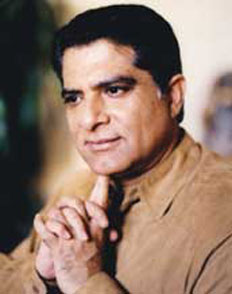
Some famous Asian Americans (ethnic origin in parentheses) are: Governor Bobby Jindal (Indian), Yahoo founder Jerry Yang (Chinese), NBC news anchor Connie Chung (Chinese), Dr. Deepak Chopra (Indian).

Deepak Chopra image, via nndb.com
Jerry Yang image, via businessweek.com

Article: Creative Commons License 2008 Gavin Barrett
This work is licensed under a Creative Commons Attribution-Noncommercial 2.5 Canada License.
ABC is an acronym for American Born Chinese. It has much the same provenance as CBC or Canadian Born Chinese, and has similar pejorative nuances depending on the circumstances in which it is used.


Article: Creative Commons License 2008 Gavin Barrett

Creative Commons License


This work is licensed under a Creative Commons Attribution-Noncommercial 2.5 Canada License.
A CBC is a somewhat less than complimentary acronym for Canadian Born Chinese. CBCs themselves often refer to more recent Chinese with the pejorative FOB (Fresh Off the Boat). Many CBCs do not speak Chinese and are often in conflict with their roots as they try to define their own place in the Canadian multicultural landscape. Some CBCs may even be bananas but not all bananas are CBCs. A large portion of Gen2 Chinese are CBCs. From an ethnographic perspective, CBCs have a great deal in common with ABCs - their cousins south of the border - than just a couple of initials.


The CBC logo shown above is a trademark of the CBC (the Canadian Broadcasting Corporation)

Article: Creative Commons License 2008 Gavin Barrett

Creative Commons License


This work is licensed under a Creative Commons Attribution-Noncommercial 2.5 Canada License.
Cantonese. White devil. Pale ghost. White demon ghoul.

You get the gist.
It has lost some of its derisive sting due to its extremely popular, colloquial use in Hong Kong, by English and Cantonese speakers alike. Used in much the same fashion as gora.

Which is to say, descriptively, to distinguish.
Or, when dipped in chilli-garlic sauce, to ridicule. Consider:
Bloody gweilos! When will they learn how to eat rice with chopsticks.


Article: Creative Commons License 2008 Gavin Barrett

Creative Commons License


This work is licensed under a Creative Commons Attribution-Noncommercial 2.5 Canada License.
Putonghua is quite simply Mandarin Chinese for "mandarin chinese."

Article: Creative Commons License 2008 Gavin Barrett

Creative Commons License


This work is licensed under a Creative Commons Attribution-Noncommercial 2.5 Canada License.
Guangdonghua is simply Chinese for Cantonese.

Guangdong is the Chinese word for Canton.
Which itself is simply a European fumbling of Guangdong.


Article: Creative Commons License 2008 Gavin Barrett

Creative Commons License


This work is licensed under a Creative Commons Attribution-Noncommercial 2.5 Canada License.
Cantonese pop music.
Dominated by the Four Kings (Jackie Cheung, Leon Lai, Aaron Kwok and Andy Lau) in the 90s.
Current stars include scandal-tainted Gillian Chung.


Article: Creative Commons License 2008 Gavin Barrett

Creative Commons License


This work is licensed under a Creative Commons Attribution-Noncommercial 2.5 Canada License.


Meaning Chinese outside, white inside.

Pejorative.

Usually employed by Chinese-Canadians to describe some second generation (or, occasionally, first generation) Chinese-Canadians (or -Americans or -Brits) who are thought to have lost too much of their culture or language.

Like coconuts, a banana typically hangs with other bananas, and often does not speak any Chinese.

Article: Creative Commons License 2008 Gavin Barrett

Creative Commons License


This work is licensed under a Creative Commons Attribution-Noncommercial 2.5 Canada License.
Click on the title of this post to read a great article by Nicholas Keung that appeared in The Toronto Star.
The piece reviews the findings of an important new study into the media consumption habits of Canada's largest minority groups and whether the country's major advertisers are actually reaching this gigantic market. It's worth noting that fifty-two per cent of the people surveyed said, "I rarely see advertising messages intended for me."


copyright 2006 Gavin Barrett All rights reserved
Click on the title above and watch the spots on YouTube.
The spots (some of them award winners) cover a total of 6 languages:
Cantonese, Mandarin, Punjabi, Tamil, Hindi and English.
Enjoy.

Popular Posts

Copyright Gavin Barrett. Powered by Blogger.

Plagiarism Watch!

Protected by Copyscape DMCA Copyright Protection