Showing posts with label ethnic. Show all posts
 
Joss paper, aka Ghost Money aka Hell Banknotes are burned to honour ancestors during China's Ching Ming Festival.


Co-written with April Barrett, with contributions from the Barrett and Welsh team

As seasoned Canadians, we often take holidays like Halloween for granted. But imagine landing in a new country, and then on October 31st, seeing a bunch of tiny people dressed up in animal onesies, begging for candy at your door.

Super weird.

Interestingly, the core concepts behind Halloween are not entirely unfamiliar to many new Canadians.

In China and among the Chinese diaspora, on Ching Ming Festival or Tomb-Sweeping Day (usually April 4th or 5th), graves are swept and Ghost Money (joss paper) is burned in homage to ancestors. Among Catholics in places like India, Hong Kong and China, Poland and the Philippines, it’s not All Hallow’s Eve that is observed but the two days that follow – All Saints Day and All Soul’s Day – the latter especially is reserved for visits to family graves, to clean them, leave flowers, pray for the souls of the departed and to light candles of remembrance. Among Mexicans, pre-Columbian ancestor worship rituals have syncretised with the Catholic traditions of the conquistadors and have re-emerged as the Dia de Muertos or as gringos have back-translated it, Dia de los Muertos – celebrated over several days.

But the particular candy-flavoured variety enjoyed with such commercial gusto in North America is a little disconcerting at first to Canadian newcomers.

It clashes with health-related customs. “Candy is bad for you!”

It runs afoul of immigrant concerns about frivolous expense. “That black halo is how much?”

Sonia’s most terrifying avatar
And it crashes in confusion as it runs into what is appropriate and what is not, as the kids stare wide-eyed at some waspy stereotype or insensitive pastiche of one’s own culture that is indubitably going to win this year’s gold medal for Most. Offensive. Halloween. Costume. Ever.

To those who are just getting the hang of this holiday, we feel you. Here are some stories straight from our staff, about their first Halloween in Canada.

Sonia My first Halloween? I was in college — it was fun to see all the makeup artist students creating Halloween characters — I got an artificial scar on my arm. The family I was living with went out trick-or-treating. Assignments were scarier to me, so I stayed home alone to work.
Ben tells Agnes about the new deadline
I was warned to not answer the door as the apartment building didn’t allow door-to-door trick-or-treating on Halloween and there were some nasty elements in the building. Around midnight, I heard a knock on the door. I ignored it but the knocking continued and didn't stop for about 10 minutes. Foolishly, with only a shoe to defend myself, I opened the door to find a bunch of drunk teenagers. I was so relieved it wasn’t a masked killer! I didn't have any candy, so I gave them a few muffins and sent them on their way!

Agnes My first Halloween in Canada was... cold. It actually snowed that day. The country that I moved here from, in October, we still wore shorts.

Ben Two months after we landed in Canada, I opened my door to an army of little ghosts, witches and blood-splattered creatures. My kids shrieked with joy as they recognized their schoolmates and blended right into this beloved Halloween tradition that we also celebrated back home. I ate most of the candy.

Savio threatens to edit Gavin's copy
Savio I had heard a lot about Halloween before moving to Canada. Boy, was I in for a treat. Weeks before the day itself, I saw houses adorned and decorated to look terrifying. I was scared just thinking about how the property value would diminish if their houses really became that way. On Halloween, my 3-year old was inexhaustible. He could barely say 'trick or treat' but every house he went to he left with his hands full. He wanted to visit every house in the city. At the end of the night, we had enough sweet treats to open a small store. Kids would not stop visiting our house screaming trick or treat. But when adults started showing up, pretending to be kids, the situation became frightening.

Gavin Not my first Halloween - but the first in our first Canadian home. I went mad — I made jack-o’-lanterns. Inspired by not-yet-a-jailbird Martha Stewart, I carved 13 or 14 pumpkins and squashes. And realized, with a horror that any well-raised Indian will understand, that a tremendous amount of gourd was going waste. I soothed my conscience by cooking every cup of carved-out calabash cavity into a curried soup rich with coconut milk. I served it to the parents who accompanied their kids on their rounds.
_______

Notice anything in these true stories? We’re being let into a secret.

New Canadians want to adopt the rituals of the new home they’ve chosen, mysterious though they may be at first. Canada has embraced them.

Their instinct is simple.

Return the hug.

Happy Halloween folks.

Gavin Barrett is Chief Creative Officer and Ideawallah at Barrett and Welsh, Toronto's most award-winning multicultural agency. Barrett and Welsh is also the official Embassy of the Democratic Republic of Insight in the Kingdom of the Blind.
-->
This post is a slightly expanded version of the opinion piece I wrote for New Canadian Media in May 2015.


There are inherent dangers and risks in launching an ethnic channel or publication. In recent times we have seen both new players and well established ones ride into the sunset.

Mehndi TV made a comet-like appearance, flashed across our airwaves for a year, only to fade to black. That was a couple of years ago. It has since appeared in another constellation – on the website for Channel Zero.

Multimedia Nova, a publishing group whose newspapers included the 59-year-old Corriere Canadese shut its presses in 2013.

The 53-year-old Canadian Jewish News shut down its print edition and went all-digital in 2013.

But the Omni announcement makes me wonder if something else is at play here.

I wonder, for instance, if Omni was “too ethnic”? In other words, did Omni take an oversimplified content strategy with the ethnic consumer?

Allow me to explain. There is too often a rush to dumb down our understanding of Canada’s multicultural markets. Too often, ethnic consumer targets are rendered into shapeless homogenized blobs that bear no resemblance to what is actually a much more finely nuanced, multi-faceted cultural reality. A content or advertising strategy created for these fictional language-centric monoliths produces fuzzy, undefined work that has little appeal or relevance.

It is tempting to limit or define foreign cultures by language just because it makes it more convenient to sell airtime or diapers or haircuts or oranges but this is both facile and dangerous. After all, there are cultures united by language and separated by geography and, equally, cultures separated by language and united by geography. Add religion and history and we start to see an incredibly complex mosaic. There is rich irony in the mental visual of senior Omni TV executives closing their eyes to this.

Worse, this oversimplification is often combined with an attempt to keep new Canadians in their ethnic boxes. To do this is to deny the powerful narrative contained in the immigrant journey and to forget the impact that becoming Canadian has on the immigrant life. A Chinese citizen in China is not the same person as a Chinese Canadian citizen in Canada.

The words over the Queen Street viaduct remind us “the river I step in is not the river I stand in.” As we make our way in Canada, Canada changes us. And we change Canada. This is powerful stuff that is rich territory for original content.

In fact I think Omni could have significantly helped its cause by taking a leaf out of CBC’s book by using original Canadian content in the official languages to target the multicultural Canadian viewer. And, by that, I mean the Canadian viewer.

I look at CBC’s HNIC play-by-play sportscasts in Punjabi and Mandarin and shows like Little Mosque – very diverse programming that reflects a very diverse reality – and I ask, why couldn’t we see more of that?

We have an amazing talent pool in multicultural Canada. There’s a multicultural renaissance going on. Right now, the Tarragon Theatre is staging an Indo-Canadian version of Shakespeare’s Much Ado and it’s been getting rave reviews. We have writers like MG Vassanji, Michael Ondaatje, Rohinton Mistry, Vincent Lam. We have  comics like Russell Peters, Mikey Bustos, Ron Josol and Sugar Sammy. Bands like Delhi 2 Dublin, artists like Ritesh Das. This is not a country with a shortage of multicultural content.

Rogers is a sophisticated media-and-message convergence advocate and a successful player in that game, so I find it difficult to accept that it is allowing its investment to fail so easily. 

I feel Omni really had a good thing going with its newscasts, but was shocked when they dropped the South Asian news in English a couple of years ago. Almost every South Asian I knew watched it.

I felt then, that it had stepped off an edge and was suspended momentarily in mid-air. Now it plummets.


Edward Curtis: Navajo Medicine Man, Princess Angeline, Hopi Mother

These faces from another time in the work of Edward Curtis are an act of photographic conscience.


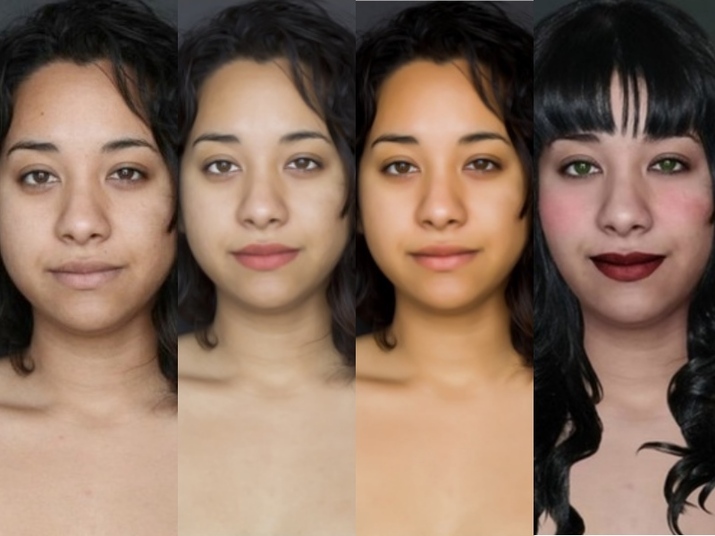
A thought-provoking pair of explorations into beauty and ethnic/racial identity: earlier in 2014, journalist Esther Honig sent a self portrait to photoshop artists across the world asking them to "make her beautiful". 

The results, perhaps unsurprisingly, reveal the impact of culture and ethnicity and a huge variety of beauty ideals/standards. http://www.estherhonig.com/#!before--after-/cvkn 

Now, biracial journalist Priscilla Yuki Wilson does the same with very different results. http://www.huffingtonpost.com/2014/09/08/priscilla-yuki-wilson-different-countries-photoshop_n_5775200.html?ncid=fcbklnkushpmg00000063


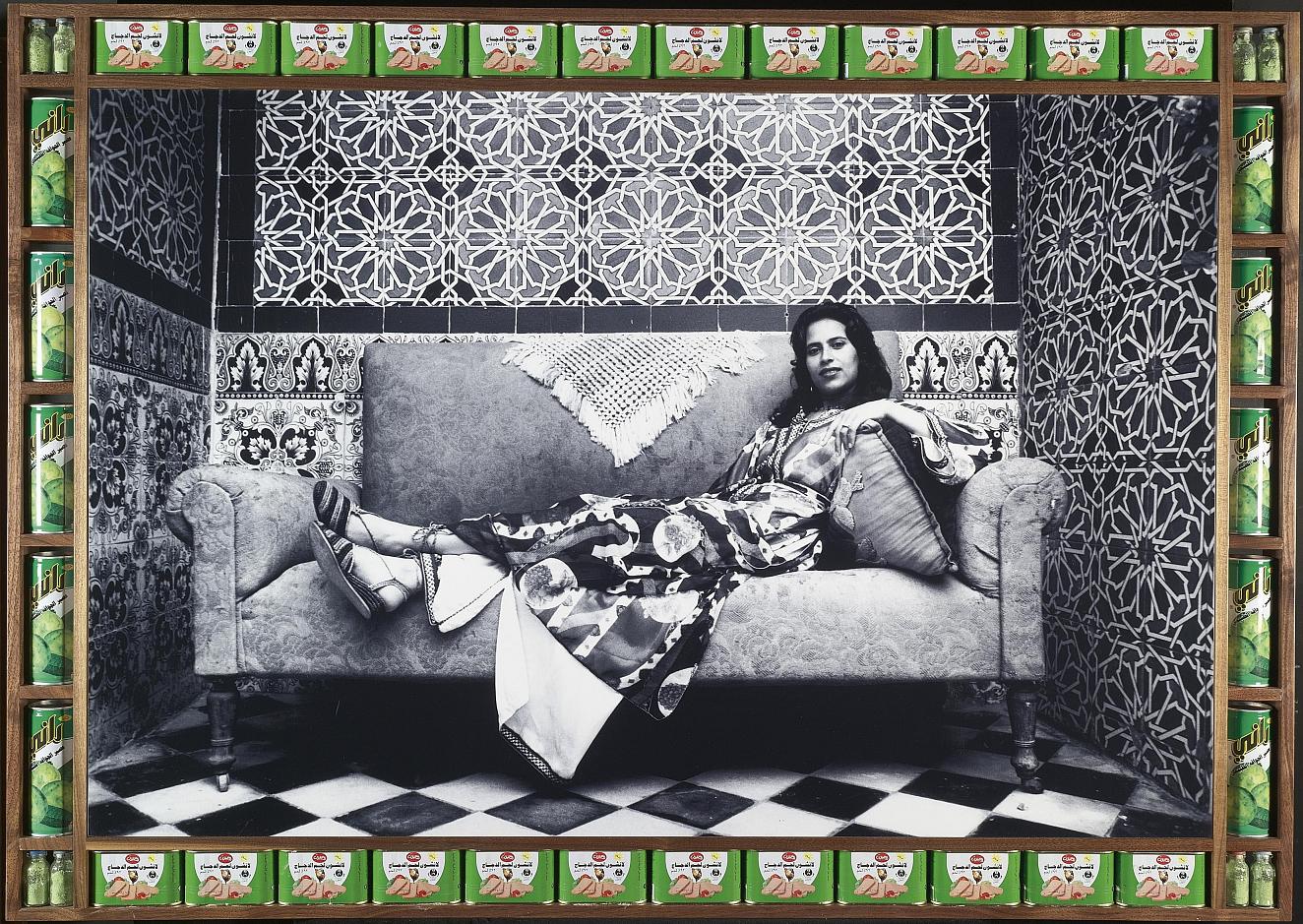
Ever since I worked with Bruno Barbey in the mid-90s I have been fascinated with the photographic resplendence radiated by all things Moroccan. Imagine my delight when photographer friend and collaborator Richard Picton drew my attention to the extraordinary vibrant work of the Morocco-born Londoner, Hassan Hajaj, in a Guardian photo feature. With self-assembled frames made from rubber, cloth, plastic, toys, tile and popcans, and portraits that are equal measures of pigment, people and pattern, Hajaj dazzles the heart of the eye where colour lives.

photos via the Guardian, the Sultan Gallery, What's up and other sources.

Note: All copyright belongs to the artists/owners of the copyrights themselves.
Years ago, I tried to work with Magnum photographer Steve McCurry and contacted Magnum to bring him to Canada to work on a BMO campaign. Alas, it didn't work out - logistics and availability didn't dovetail neatly enough for the client. 
In the end, I went with Robert Earnest who won several awards for the photography on that campaign. (Will share those at some point.)

Steve McCurry is an artist whose paintbrush is opportunity, that most fickle of mistresses. The result is a series of extremely gratifying retinal explosions. 

Rang bharela, rang be rangey we would say in India (one of McCurry's favourite subjects): stuffed with colour, colour upon colour, bursting with colour.

Do not rub your eyes. This is real. 

Note: All copyright belongs to the artists/owners of the copyrights themselves.


Article: Creative Commons License 2012 Gavin Barrett
This work is licensed under a Creative Commons Attribution-Noncommercial 2.5 Canada License.


In this series of posts on great multicultural photography, I must confess to a deliberate, simple editorial decision - I use the word multicultural to simply mean subjects that are not Western European or white Anglo-American. All other cultures, ethnicities and traditions have been included. 

However, I have not viewed photographers through the same lens as their photography. These images have been shot by great photographers from around the world. There are French and Chinese photographers, Indians and Italians, Americans and Brazilians - all that matters to me is that their eyes saw the wealth we have been blessed with. All copyright belongs to the artists/owners of the copyrights themselves.

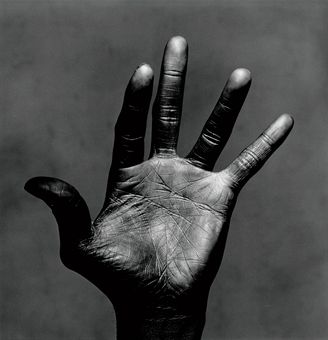
Ladies and gentlemen, Irving Penn.


Irving Penn


TD Canada Trust continues to make Canadian South Asians feel welcome, as our latest spot for them shows.

The premise here is equally simple and incredibly relevant - i.e. TD makes mortgages comfortable, desi style. Instead of the anxiety of negotiating your first Canadian mortgage in a completely unfamiliar setting, TD's mortgage process makes you feel at home. With mortgage specialists who come to you, who get you, who speak the same language as you figuratively and literally.

It's one reason why the majority of desis bank with TD: TD makes mortgages comfortable, desi style.

This idea is demonstrative - TD is not just saying "we get you" it is showing it, in the ad.
(Desi = a person of Indian extraction)


The team:
Client: TD Canada Trust
Agency: Barrett and Welsh

Creative Directors: Mike Welsh and Gavin Barrett
Writer: Gavin Barrett
Art Director: Bhupesh Luther/Gavin Barrett

Directed by: Richard Picton
Executive Producer: Augusta Brook

Editor: Chris Brook
DOP/Colour: Johnny Askwith
Motion graphics: Alwyn Pereira

Music: Night in Lenasia by Deepak Ram, Golden Horn Productions
Sound design: WantedSP, Toronto
Click on the title of this post to read a great article by Nicholas Keung that appeared in The Toronto Star.
The piece reviews the findings of an important new study into the media consumption habits of Canada's largest minority groups and whether the country's major advertisers are actually reaching this gigantic market. It's worth noting that fifty-two per cent of the people surveyed said, "I rarely see advertising messages intended for me."


copyright 2006 Gavin Barrett All rights reserved

Popular Posts

Copyright Gavin Barrett. Powered by Blogger.

Plagiarism Watch!

Protected by Copyscape DMCA Copyright Protection