Showing posts with label multicultural. Show all posts
As an ad agency specializing in inclusion there are some holiday questions we often face. Whom do we wish? When? How? And, if we do it wrong, will we be trolled? 
Allow us to be the star that guides you this Christmas. 
Presenting the Barrett and Welsh Christmas Decision Tree.
Hugs*.
Merry Christmas.
From me and all the decision-tree-huggers at Barrett and Welsh
Gavin
*Note: please respect those who prefer not to be hugged or kissed and offer beer or curry instead.
Caution: Hugging or kissing the following may be injurious to your health: cacti, porcupines, puffer fish, pythons and aliens who are nicknamed Spike.
-------
Gavin Barrett is Chief Creative Officer and Ideawallah at Barrett and Welsh. Toronto's most award-winning multicultural ad agency, Barrett and Welsh was mostly recently awarded the Star of Christmas by Santa Claus, in recognition of annual contributions made to Christmas merriment above and beyond the call of duty.

This fascinating read in the Washington Post exposes the expectations the mainstream has of the multicultural and, equally, multicultural expectations of the mainstream when it comes to what a cultural brand should be named.

Emperors and Empresses fence with Chopsticks and wrestle Pandas and Dragons for top spot among Chinese restaurant names, across the USA. Imperial Gardens, Golden Woks and Great Walls hold their own against a mob of Jade Villages and several Bamboo Groves. Even this rather convenient online Chinese restaurant name generator only serves to underscore our reluctance to use our noodle in favour of the lazy familiarity of the cliché.

I guarantee very similar findings with Indian restaurants - across the world. It is a world ruled by Maharajas, Maharanis and their edifices - their Taj Mahals, their Bombay Palaces and occasionally when slumming it, by their humbler Huts, whether serving Dosa, Roti or Curry. Here and there we see a sideways leap from Kadhais to Tandoors - that's frying pan to fire for those unaware of the cuisine's argot.

It's easy to see why in a world of Stupidly Imitative™, Ho Hum™ and Same Old Same Old™, we are passionate about differentiation and why we were careful to guide our FreshCo client away from stereotypes and clichés when we went to work for them. And it's why the brand they so correctly approved and ran with - Chalo - is so right for our time and for our audience.  

Gavin Barrett is Ideawallah at Barrett and Welsh, a Toronto agency which serves as defacto Ministry of Defence in the war against cliché, whether in Arabic, English, Putonghua, Macedonian, Pig Latin or Zamboni. (Just checking to make sure you were paying attention). No pandas or dragons were hurt in the writing of this post which also appeared as a LinkedIn post by Gavin.

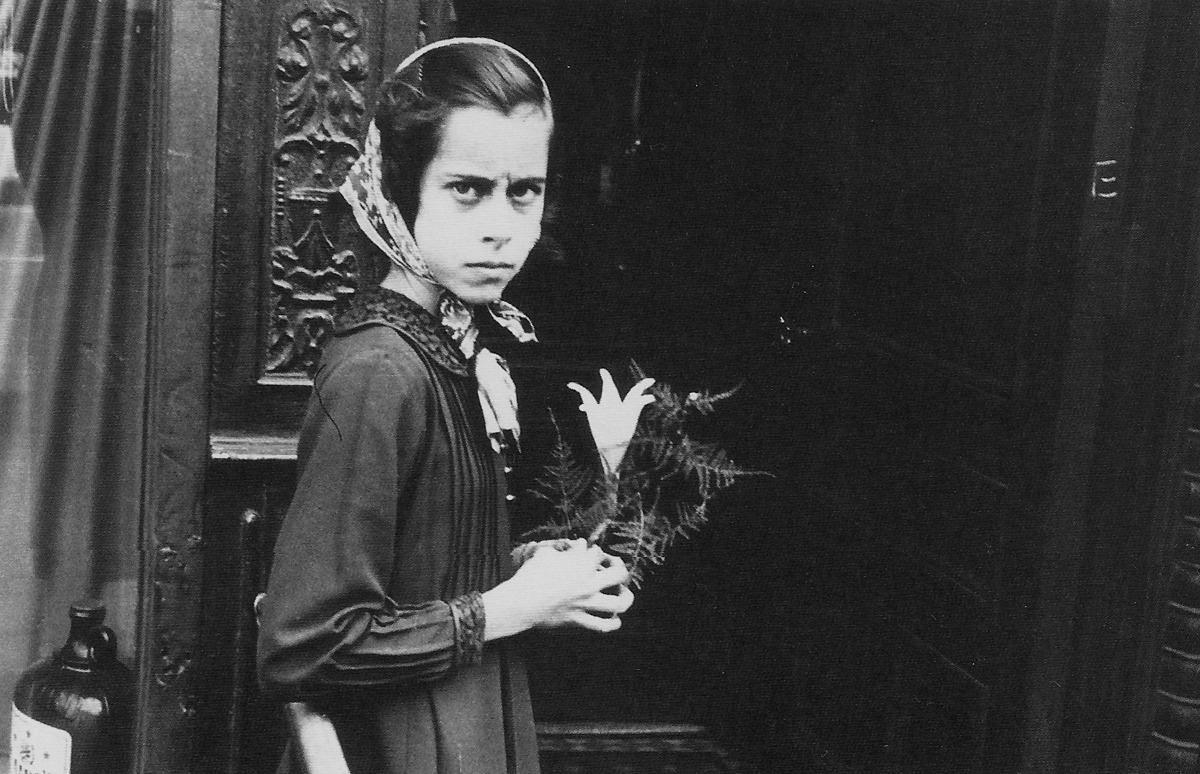
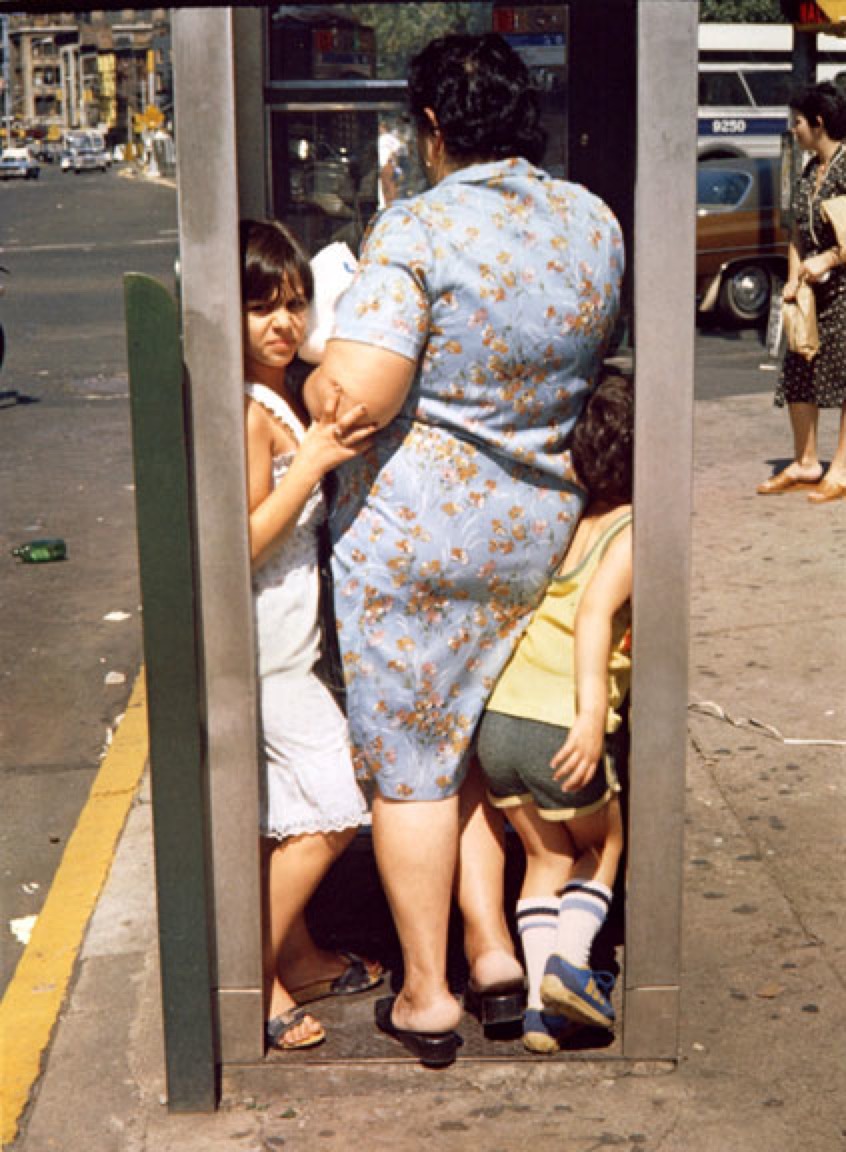
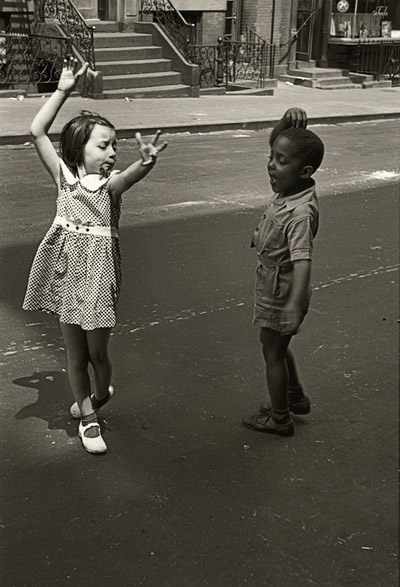
Before Humans of New York became a social media sensation and before Bill Cunningham made street photography fashionable, Helen Levitt, inspired by a conversation with Cartier-Bresson and took to the streets of Manhattan equipped with a Leica. She slipped past the glitter and lights and makeup to examine the underbelly, the grit. Hers was the city that built the city - the myth that is New York. From the late 30s, and well into the 90s, she wandered through poor, working-class neighbourhoods, alert to their incredible life, sensitive to how they pulsed with interaction. She captured evanescent moments of joy and beauty, the pleasure and play of children, men and women, talking, waiting, watching as cultures and communities connected on the street to make and shape the New York we now know. Towards the end of her long life (she died in 2009, aged 95), she lamented that much of what she photographed had vanished. “I go where there’s a lot of activity,” she said. “Children used to be outside. Now the streets are empty. People are indoors looking at television or something.”


You can read and see more about Helen Levitt in the New York Times' obituary for her.

Helen Levitt, New York, c.1940

 
Helen Levitt / New York City, c 1940


Helen Levitt 1928-2009 New York City (Girl with Lily). From Joshua P. Smith Collection of Photographs

Well Dressed Man on the Streets of New York City, 1940 by Helen Levitt
Helen Levitt / NYC (Phone Booth) 1988


Note: All copyright belongs to the artist/owners of the copyrights themselves.
The Yellow Pages campaign makes it onto CBC. But for all the wrong reasons. Bibimbap is a rice dish. And the visual shows noodles. As tweeter @edwaan points out. Another commenter on Facebook helpfully explained: "Think about having the copy about the best pasta in town and the icon is pizza. It's that weird."


Edward Curtis: Navajo Medicine Man, Princess Angeline, Hopi Mother

These faces from another time in the work of Edward Curtis are an act of photographic conscience.
Multicultural advertising has traditionally been the domain of smaller agencies. But over time, the category has become important to the long-term success - and the survival - of brands in the Canadian marketplace.
Sensing opportunity, a few big mainstream agencies have muscled into the space and begun stealing everyone else's lunch. This is unsurprising. And, the truth is it could be a shot in the arm for the category, if it grows awareness and intelligence and adds to the discipline overall.
But the question is, does Goliath get it? Do these shops truly know what they are doing? Do they have the experience, skills and sensitivity to counsel clients with integrity and courage around the thornier issues? Can they keep their giant feet out of their giant mouths? Or are they bulls in the proverbial (multicultural) china shop?
Like any David, I want to know what I'm up against and regularly go walkabout on the wild woolly web in search of giant scat. Precisely such a journey, led me to visit the website of one major Canadian mainstream agency, wherein I found this pithy phrase: Our dedicated team of multicultural Asian and South Asian market specialists can effectively grow your business within Canada’s wealth of diverse communities. Fluent in the languages and cultures we target (including Asian and South Asian), we blend research-based insights with personal experience to create work... (etc etc)
I'd like to tell them what's wrong with this, but where to begin. And which language I should use? Asian or South Asian? (Clearly English isn't their strong suit - my most generous analysis tells me this could be a Case of The Dangling Modifier but surely Big Mainstream knows English). No, I think I've understood the point. So here goes.
Dear Big Mainstream,
Your little blurb raises some important questions.
#1: Who speaks Asian? And where do they speak it?
#2: Who speaks South Asian? And where do they speak it?
#3: How can I become "fluent in cultures"?
#4: What exactly is a "multicultural Asian"?
#5. Did you just tell me you're an expert in the polka-dotted and pin-striped market because a bunch of polka-dotted and pin-striped people work for you? Because I think that's what you're saying. You know, the "personal experience" bit.
Oh dear. Slingshot empty. Time to find another Goliath.
------
Gavin Barrett is Ideawallah at Barrett and Welsh, a Toronto agency that specializes in the new Canada.


A thought-provoking pair of explorations into beauty and ethnic/racial identity: earlier in 2014, journalist Esther Honig sent a self portrait to photoshop artists across the world asking them to "make her beautiful". 

The results, perhaps unsurprisingly, reveal the impact of culture and ethnicity and a huge variety of beauty ideals/standards. http://www.estherhonig.com/#!before--after-/cvkn 

Now, biracial journalist Priscilla Yuki Wilson does the same with very different results. http://www.huffingtonpost.com/2014/09/08/priscilla-yuki-wilson-different-countries-photoshop_n_5775200.html?ncid=fcbklnkushpmg00000063


In March 2013, David Brown who is Managing Editor at Marketing Magazine asked me to write an article about the best multicultural advertising in the world - or to put it more simply, the best advertising in the world.

I said yes, of course, sensing an opportunity to let loose one of my favourite rants. You see, audiences exposed to advertising of Cannes-dominating stature in their home countries immigrate to Canada only to discover that they are being addressed like idiots. (If immigrants were so stupid, why would they have picked Canada?) And do marketers imagine that immigrants from the largest television and online media consumption markets in the world don’t notice their lack of commitment to connect with them in those media here — or the substandard, step-sisterly low-budget production values when they do? Etc etc.

Well, I worked myself up into a pretty lather. Probably as close as I will ever come to being the man your man wants to be aka Isaiah Mustafa.

Anyway, here's a link to the full article, on Marketing Magazine's website.
Enjoy.

And if you like to see how we carry the torch for intelligent multicultural creative here in Canada, click here to view our multicultural work on our website.

Peace.


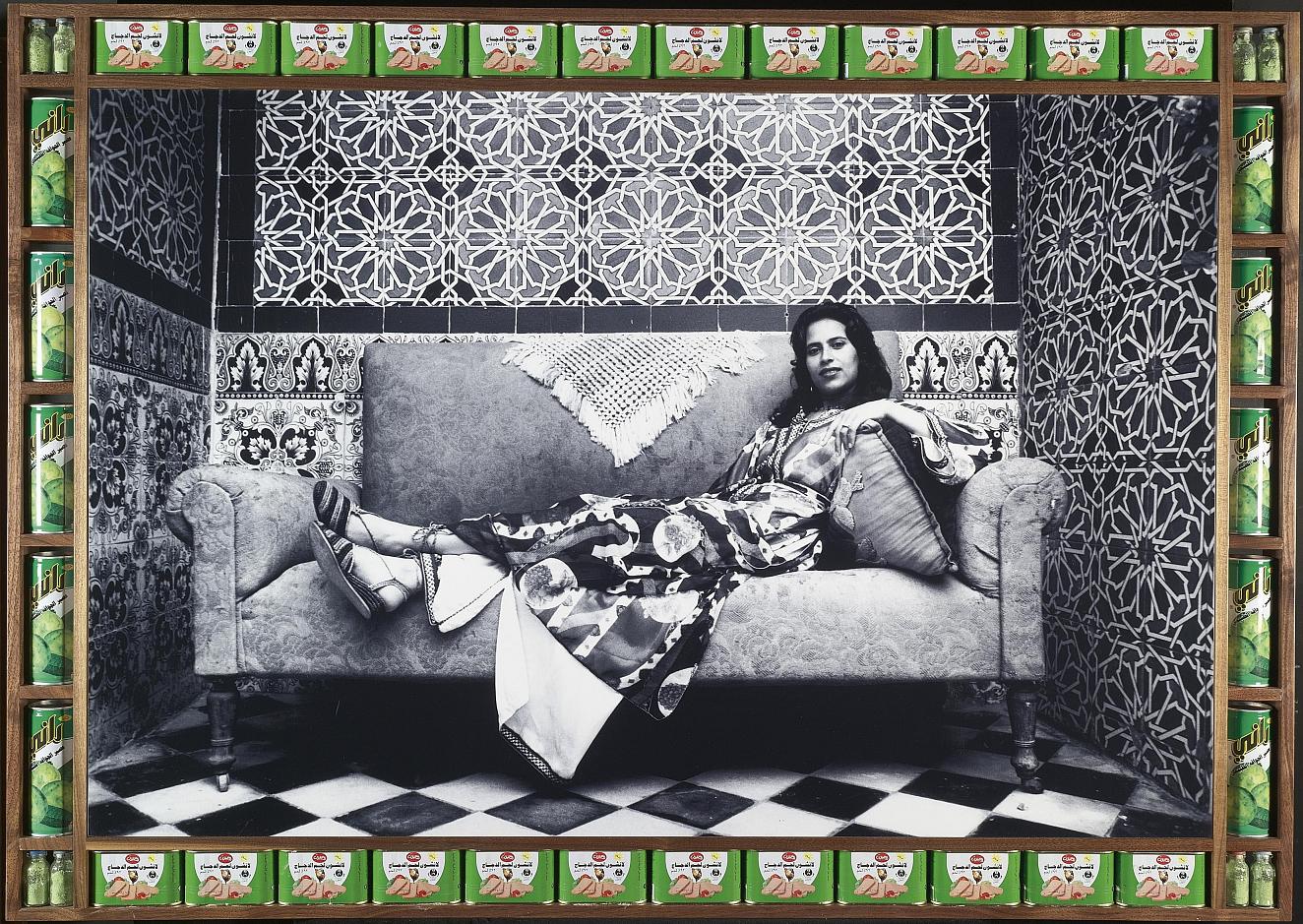
Ever since I worked with Bruno Barbey in the mid-90s I have been fascinated with the photographic resplendence radiated by all things Moroccan. Imagine my delight when photographer friend and collaborator Richard Picton drew my attention to the extraordinary vibrant work of the Morocco-born Londoner, Hassan Hajaj, in a Guardian photo feature. With self-assembled frames made from rubber, cloth, plastic, toys, tile and popcans, and portraits that are equal measures of pigment, people and pattern, Hajaj dazzles the heart of the eye where colour lives.

photos via the Guardian, the Sultan Gallery, What's up and other sources.

Note: All copyright belongs to the artists/owners of the copyrights themselves.
Years ago, I tried to work with Magnum photographer Steve McCurry and contacted Magnum to bring him to Canada to work on a BMO campaign. Alas, it didn't work out - logistics and availability didn't dovetail neatly enough for the client. 
In the end, I went with Robert Earnest who won several awards for the photography on that campaign. (Will share those at some point.)

Steve McCurry is an artist whose paintbrush is opportunity, that most fickle of mistresses. The result is a series of extremely gratifying retinal explosions. 

Rang bharela, rang be rangey we would say in India (one of McCurry's favourite subjects): stuffed with colour, colour upon colour, bursting with colour.

Do not rub your eyes. This is real. 

Note: All copyright belongs to the artists/owners of the copyrights themselves.


Article: Creative Commons License 2012 Gavin Barrett
This work is licensed under a Creative Commons Attribution-Noncommercial 2.5 Canada License.


In this series of posts on great multicultural photography, I must confess to a deliberate, simple editorial decision - I use the word multicultural to simply mean subjects that are not Western European or white Anglo-American. All other cultures, ethnicities and traditions have been included. 

However, I have not viewed photographers through the same lens as their photography. These images have been shot by great photographers from around the world. There are French and Chinese photographers, Indians and Italians, Americans and Brazilians - all that matters to me is that their eyes saw the wealth we have been blessed with. All copyright belongs to the artists/owners of the copyrights themselves.

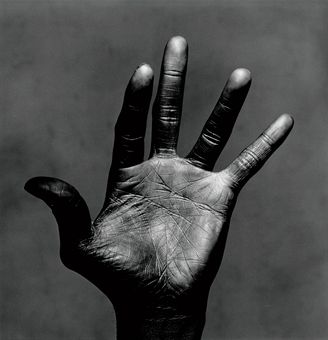
Ladies and gentlemen, Irving Penn.


Irving Penn
Multicultural wealth is intellectual treasure. Shakespeare knew that when he borrowed from Boccaccio and Ariosto.

I've always believed that diversity gives us inspiration, sources, variety, talent - that it enriches us culturally because it expands our knowledge.

So it was a pleasure to discover this 24 min video by the VCU BrandCenter. It's a thought-provoking look at the impact of diversity on advertising and how it has brought us to the edge of a new creative revolution in the industry.


80 years ago, Maxwell House began doing a Passover campaign that touched the Jewish community in a then new and now still intensely relevant way. Stuart Elliot, the New York Times' Media And Advertising reporter covers the campaign here.

Today it's called multicultural advertising.
80 years ago, it was called good business.
It still is.


An interesting pair of developments have happened in the political multicultural space since the beginning of this week.

On one hand, Canada's federal Minister for (the word "for" has rarely been so loaded with irony) Citizenship, Immigration and Multiculturalism, Jason Kenney, was discovered to have stealthily slashed visas to skilled workers by 20% and made it more difficult for elderly parents to join their adult children in Canada - it could take as long as 13 years now. Here's a link to the article as it appeared on CBC.ca.

On the other hand, he issues a cleverly crafted, very public statement that purports to show how much he loves cricket and immigrants and Canada's World Cup cricket team - and boasts of the high volume of immigrants that came to Canada from cricket-playing countries last year.

In a surprisingly common phenomenon, pro-conservative ethnic media outlets have simply run Minister Kenney's release as is - without any reporting, no questions asked. Click here for the original.

Judge for yourself - compare the original with a quick scan of ethnic media websites next.

On the media coverage front, is this a case of the Progressive Conservatives' substantial "say the right thing while doing the opposite" policy paying heavy dividends or a mere case of printing the silly, mid-on, by sympathetic ethnic media? I leave it to you to decide, dear reader.

The deployment of cricket politics by the federal Conservatives may represent part of their new strategy for new Canadians. It's an entertaining notion. Ladies and gentlemen, next on stage Prime Minister Stephen Harper will shimmy Bollywood-style - possibly to "jhooth bole kauwa kaate..." (trans: "if you lie, crows will peck at you"). Watch for something like it at the IIFAs.

Yes, this is another case of Progressive Conservatives talking out of both sides of their mouth, but one thing's for sure: they have pursued a disciplined, sustained strategy of engaging new Canadians. They have looked for a fit in the area of Asian-style social conservatism, combined it with high-visibility opportunistic PR like the cricket world cup, while neatly skating around their anti-immigration policies. The PCs still lag behind the Liberals as the natural party of new Canadians but they have been working hard to change this. Watch this space for more.
How North America's growing diversity has changed the way advertising is created. Our increasingly diverse market:
1. prevents the use of gratuitous inside jokes (i.e. unique only to a single culture)
2. heightens sensitivity to cultural irritants or flashpoints (for example: don’t use the number 4 in a toll-free number if you have a large Chinese audience) and to negative stereotypes (jokes on accents), something the advertising industry was previously oblivious to.
3. Places increased demands on advertisers to fairly represent this diversity in their advertising
4. Most importantly, it often demands that ethnic consumers be treated as an important focus market.

When you should market to ethnic groups: You should always market to ethnic groups if it makes business sense. The size of the ethnic group in the market determines whether they should be targeted. Occasionally, a cultural proclivity among a particular group that predisposes them to a product or service, may also influence this decision (for example, a cultural tendency to invest in the stock market or to buy luxury cars). When an ethnic market has reached critical mass, when there is a cultural fit between product and consumer, and when there is a sufficient marketing budget to advertise effectively, ethnic advertising should be developed without delay.

How to reach multicultural consumers: The rules are the same as for mainstream: find out what their media consumption habits are, always be willing to consider innovative media (as traditional ethnic or multicultural media may not be adequate/appropriate), understand their pyschographics and tailor your communications accordingly.

How to measure success in multicultural communications: Success in this market - like any other - is always measured in results. The form of measurement may vary - it may be measured by sales or responses (to a toll-free number or tracked url). Additionally, a critical measure of success in multicultural markets is often distinguished by a “viral” or word-of-mouth effect and popular recall (and replay) of brand messaging. Ultimate success is when a community adopts a brand.

Which media work better for multicultural communications: TV works best in Canada across most major multicultural markets (South Asian and Chinese), followed by internet in second place, radio and newspapers in third and magazines fourth. Outdoor advertising for these markets is poorly developed and underserved in Canada at the moment. Sponsored event marketing is popular and successful as well, as these markets tend to congregate at cultural gatherings in large numbers to celebrate their diversity and heritage. Innovative media like digital signage and multicultural flyers are beginning to make inroads.

How to communicate across languages and cultures There is no such thing as a universal language.
But there are universal human insights, true across all cultures. Our motivators have been the same since we strode out of Africa in prehistoric, pre-ethnic, pre-cultural times. Shelter, food, sex, love, death, approval and belonging have always been on our mind.

Even now, we have similar needs, ambitions and fears.
We love our families. We aspire to better, happier lives. We want to be healthy. We fear death.

However there is no escaping that these are most effectively leveraged through psychocultural filters.
So, find a universal human insight but leverage it in culture-relevant ways.
Imagine a scene in a TV script that says "Open on a loving family eating dinner together".
For a South Asian the archetypal family is a joint, multi-generational family - between 6 and 10 people
For a N American, it is a nuclear family - four or five people.

The role of language: Language is only a mechanism for communicating, Choosing to advertise in Hindi or Spanish must be based on simple demographics and target preferences. Once that is done, what you say and how you say it is even more important than the language you say it in.

What about pictures? A picture may be worth a thousand words but it still takes words to say so.
I used to have that on my business card. On the other hand maybe I’m biased. I am a writer after all.

"Mainstream ethnic" is not ethnic. Like world music or Canadian Chinese food some ethnic things have gone mainstream. But remember they have been adapted to N American tastes and are often a far cry from the real thing. (Consider: there are no fortune cookies in China). Don't get confused by local cliches. Keep your mind open to the real thing.

The role of marketers from ethnic groups: Being white doesn't make you better at advertising to white folks. Being an advertising professional does. With the ethnic market, familiarity with culture and language has advantages for sure, but you don’t need to be of that ethnicity to be able to create effective advertising. If that was the case, an Indian (me) would never have been able to be successful in Hong Kong – or Canada for that matter. You do need to be open-minded. And interested in that culture. Encourage openness, discourage political correctness, fill your staff's headspace with global influences and examples.

I am fond of saying that in today's Canadian market, if it ain't multicultural it ain't mainstream. But the more multicultural our markets are, surely the more fragmented they become? Not so.

The way I see it, it's not our new multicultural society that's fractured - it's old mainstream that is fracturing.

But wait, there's no reason to panic. It's not as bad as it seems. All this fracture business sounds painfully like we're talking about a bone breaking when in reality we're talking about an egg, hatching.

After all, we never really had a homogenous culture in bilingual Canada - and perhaps bilingualism and the distinct identities of Quebec and the First Nations were always a sign that this idealized (by some) homogenization would never come to pass.

Our changing demographics tell us that this is now a matter of fact, not opinion, borne out by the 2006 census (the fruits of the sainted "long form"). 6.1 million Canadians were born elsewhere and that population is growing 4 times faster than the Canadian born. The 1.1 million new Canadians who arrived between 2001 and 2006 accounted for 69% of all the population growth.

If advertising and marketing courses don't begin teaching multicultural marketing and advertising now, they'll be turning out students who will see markets that don't resemble their textbook markets in the slightest way. At the very least, they need to begin changing their syllabi now. Multicultural advertising and marketing needs to be taught, at least as a module in established courses.

In about five years, the mainstream as we know it today will have changed - by 2017 it will be an entirely different marketing reality and by 2030 it will be a brave new world for the bright, smart marketers and universities who took what their stats and research departments told them and applied it to their strategies and syllabi.

The fundamentals aren't changing because the new mainstream is a different colour. It's changing because the new mainstream is fundamentally different in every way - culture, conservatism, language, religion, cultural habits around money (saving it and spending it) and cultural habits around food. And the most fundamental thing about advertising/marketing is that it is about how people work. This is not an old "us" vs. a new "them". This is just a new "us."

One of the cool things about Canadian immigrants is that they want to be Canadian and they are proud to be Canadian, but they also discover very early that it is really difficult to define what "Canadian" is. Ultimately however, they come to realize in a single, empowering, incredibly Canadian moment that being Canadian is... being themselves.

And that is why I believe we need the Canadian marketing industry to invest in understanding this new emerging mainstream better - it's not going away. It's going to get stronger, richer, more vibrant and more challenging to deal with. Preparing for it is simply good business.

In fact, in our multicultural, polyglot, many-hued future, our local need for hybrid minds is going to serve us well globally - a rare instance where Canada is destined to be uniquely competitive. This is a time to learn how to spread our wings. One day we're going to have to fly. If we don't, we're going to have egg on our face.

Sunrise by the Ocean by Vladmir Kush via www.vladimirkush.com © 2008 Kush Fine Art. All Rights Reserved.
When I talk to my colleagues in the multicultural marketing and advertising industry, I hear the same cries of pain, the same complaints, the same scars of battles lost and I've been hearing them for a few years.

We bemoan the poor quality of work that we tend to see in the multicultural market - some of us even confess, shamefacedly, that we made some of it - because business needs forced us into it (never a valid excuse in my opinion). But, set aside for now, multicultural advertising's collective inability to have a spine. Let us say, for the purpose of argument, that we always face our clients fully armed with intelligence, commitment, knowledge and integrity. Are there still roadblocks that stop the most creative advertising from making it into the market?

I believe there are. Here are the five most common impediments.

1. Multicultural "councils".
Do you do this with Quebec? When did merely being brown qualify anyone to judge multicultural advertising? Do clients do this with mainstream ads? Do they ask random white folks if their multimillion-dollar campaign works? And then, do they yank it?

Advice to clients: Follow the same discipline you do in the mainstream and set a budget for tracking the effectiveness of your work with genuine research. Don't take comfort or guidance from the opinions of random pink, green or polka-dotted folks who work for you just because you are doing a campaign for the pink, green or polka-dotted market. And, if you absolutely must, then for Buddha's sake, make them proper members of your team, at the table from the creative briefing through to the creative presentation.


2. Junior staff assigned total multicultural marketing responsibility.
Insulting. If you aren't ready to commit, don't. When a senior client assigns an untrained junior to the multicultural portfolio it is a clear and simple message to your agency: this is not important. At best, you will get safe, predictable advertising that mindlessly mimics your mainstream advertising in another language with none of the value addition that insight-driven ideas bring. The worst thing that can happen unfolds if the junior employee is culturally insensitive to boot. Instead of a beautifully timed series of controlled chain reactions that power your brand forward, you get a multicultural Chernobyl - your brand will become radioactive in the very market you were trying to win - the fallout is that your consumer won't come anywhere near you for a long, long time.

Advice to clients: pick your multicultural advertising leaders carefully - they do not have to come from minority markets themselves but they should have the marketing chops for the job and they should demonstrate curiosity about cultures other than their own, and an openness that an alternative cultural viewpoint can even exist.


3. Lip service (let's just translate) and tokenism (IVMH).
Don't waste my time. I won't waste your money. We routinely turn away translation clients.
IVMH stands for Insert Visible Minority Here and refers to the tendency of many marketers to simply replace mainstream talent with a random brown or Chinese face. I will write more about this in another post - and I spoke briefly about it in the CBC interview. The patronizing attitude that lies behind this sort of business decision is not lost on your consumers.

Advice to clients: Stop doing this. Immediately. Save your money and invest it in insight-driven idea-centric communications instead.


4. Pretend expertise.
Too many agencies pretend to be more than they are. We see Hispanic agencies that swear that they can manage Asian American markets without an issue - or vice versa. We see Chinese market agencies that say they can handle South Asian markets - or vice versa. There are some that do, but these are few and far apart.

Advice to clients: Make sure they have the expertise - ask to meet their creative teams.


5. A dearth of creative talent:
This is a hard fact that we must face in order to change things. We have a shortage of high quality creative talent in Canadian multicultural advertising. Here's my requirement of my multicultural creative team - and my minimum definition of "high quality": they need to be good enough to work at a good Canadian mainstream agency and they need to have won mainstream awards. If they haven't they aren't. Why do I say this? Because, for your sake dear client, they need to be able to understand the discipline and rigour of Canadian mainstream strategic planning and advertising, they need to rise above the ad hoc, anything goes mentality that dominates so many multicultural agencies.

Advice to clients: ask your agency who from their team has worked in the mainstream.

In closing, some general recommendations that I believe will help us fix things.

If you're an agency: train, support, inspire, invest.
Lead by example: don't compromise because the business is small or the sector is weak.
Teach your creative staff how to walk the talk.
For my part, I am founding an organization that will recognize the best creative work in the category, with judges who are world class. If you're interested in supporting or joining this, write to me.

If you're a client: Commit to and demand the best.
Expect the same things from your multicultural agency as from your mainstream agency.
Work of the highest strategic and creative quality for your market. People you can enjoy working with and can trust to deliver.
I would challenge you to provide the same things to your multicultural agency as you do your mainstream agency. Great, disciplined marketing briefs, the involvement and interest of senior marketing management, and the same respect for the process you give mainstream work.

If you're the industry: Of course, the industry needs to support this: how much multicultural marketing or advertising is actually taught in universities and schools? I haven’t heard of a single real commitment to creating a sense of multicultural advertising as a real discipline. It is not taught at any of the advertising programs in Canada - which is both, a shocker, and sadly reflective of how the Canadian advertising industry has long been the last, late adopter of multiculturalism.


For S Asians, bragging rights around the joy of travel are directly connected to the sights and sounds of home and family.
We tap into this visceral connection with "home" in our latest spot - for TD Visa First Class.

The team:
Client: Graham Robertson, Anne Kerekes, TD Canada Trust
Agency: Barrett and Welsh

Creative Directors: Mike Welsh and Gavin Barrett
Writer: Gavin Barrett
Art Director: Bhupesh Luther/Gavin Barrett

Directed by: Richard Picton
Producers: Augusta Brook/Wendy Errington
Agency Production Coordinator: Tina Chan

Editor: Chris Brook

Music/Sound Design: Mark Dwyer, Zoo Music
Sound Engineer: John "Wheels" Hurlibut

DOP: Johnny Askwith
Studio: Deb Cochrane
Motion graphics: Alwyn Pereira
This outstanding video from TED may be one of the most insightful presentations I've heard on the relationship between culture and consumer choice.

Sheena Iyengar dispenses with the consumer focus group and leaves behind some of the more obsolete but dearly loved quantitative testing methods so popular among marketers today. Instead, she dives deep into the the psychocultural motivations behind the act of choosing. Iyengar's research has been informing business and consumer-goods marketing since the 1990s and has produced material for writers like Malcolm Gladwell. All of which makes me think that her new book, the Art of Choosing is well worth buying.


Sheena Iyengar on the art of choosing | Video on TED.com


Article: Creative Commons License 2010 Gavin Barrett
This work is licensed under a Creative Commons Attribution-Noncommercial 2.5 Canada License.


I know we're well past the 2008 US election but good design - and its endangered cousin, good multicultural design - lives on.

Take a look at this stunningly designed 08 graphic that rises above and beyond the mono-cultural, duochromatic, partisan world of US politics to present an ideal: a beautiful, harmonized blend.

If only the reality were as attractive (check out the comments via the blog link below and you'll quickly see what I mean).

By designer Renan Molin, via the designyearbook blog.


Article: Creative Commons License 2010 Gavin Barrett
This work is licensed under a Creative Commons Attribution-Noncommercial 2.5 Canada License.

Popular Posts

Copyright Gavin Barrett. Powered by Blogger.

Plagiarism Watch!

Protected by Copyscape DMCA Copyright Protection