
An interesting pair of developments have happened in the political multicultural space since the beginning of this week.

On one hand, Canada's federal Minister for (the word "for" has rarely been so loaded with irony) Citizenship, Immigration and Multiculturalism, Jason Kenney, was discovered to have stealthily slashed visas to skilled workers by 20% and made it more difficult for elderly parents to join their adult children in Canada - it could take as long as 13 years now. Here's a link to the article as it appeared on CBC.ca.

On the other hand, he issues a cleverly crafted, very public statement that purports to show how much he loves cricket and immigrants and Canada's World Cup cricket team - and boasts of the high volume of immigrants that came to Canada from cricket-playing countries last year.

In a surprisingly common phenomenon, pro-conservative ethnic media outlets have simply run Minister Kenney's release as is - without any reporting, no questions asked. Click here for the original.

Judge for yourself - compare the original with a quick scan of ethnic media websites next.

On the media coverage front, is this a case of the Progressive Conservatives' substantial "say the right thing while doing the opposite" policy paying heavy dividends or a mere case of printing the silly, mid-on, by sympathetic ethnic media? I leave it to you to decide, dear reader.

The deployment of cricket politics by the federal Conservatives may represent part of their new strategy for new Canadians. It's an entertaining notion. Ladies and gentlemen, next on stage Prime Minister Stephen Harper will shimmy Bollywood-style - possibly to "jhooth bole kauwa kaate..." (trans: "if you lie, crows will peck at you"). Watch for something like it at the IIFAs.

Yes, this is another case of Progressive Conservatives talking out of both sides of their mouth, but one thing's for sure: they have pursued a disciplined, sustained strategy of engaging new Canadians. They have looked for a fit in the area of Asian-style social conservatism, combined it with high-visibility opportunistic PR like the cricket world cup, while neatly skating around their anti-immigration policies. The PCs still lag behind the Liberals as the natural party of new Canadians but they have been working hard to change this. Watch this space for more.
How North America's growing diversity has changed the way advertising is created. Our increasingly diverse market:
1. prevents the use of gratuitous inside jokes (i.e. unique only to a single culture)
2. heightens sensitivity to cultural irritants or flashpoints (for example: don’t use the number 4 in a toll-free number if you have a large Chinese audience) and to negative stereotypes (jokes on accents), something the advertising industry was previously oblivious to.
3. Places increased demands on advertisers to fairly represent this diversity in their advertising
4. Most importantly, it often demands that ethnic consumers be treated as an important focus market.

When you should market to ethnic groups: You should always market to ethnic groups if it makes business sense. The size of the ethnic group in the market determines whether they should be targeted. Occasionally, a cultural proclivity among a particular group that predisposes them to a product or service, may also influence this decision (for example, a cultural tendency to invest in the stock market or to buy luxury cars). When an ethnic market has reached critical mass, when there is a cultural fit between product and consumer, and when there is a sufficient marketing budget to advertise effectively, ethnic advertising should be developed without delay.

How to reach multicultural consumers: The rules are the same as for mainstream: find out what their media consumption habits are, always be willing to consider innovative media (as traditional ethnic or multicultural media may not be adequate/appropriate), understand their pyschographics and tailor your communications accordingly.

How to measure success in multicultural communications: Success in this market - like any other - is always measured in results. The form of measurement may vary - it may be measured by sales or responses (to a toll-free number or tracked url). Additionally, a critical measure of success in multicultural markets is often distinguished by a “viral” or word-of-mouth effect and popular recall (and replay) of brand messaging. Ultimate success is when a community adopts a brand.

Which media work better for multicultural communications: TV works best in Canada across most major multicultural markets (South Asian and Chinese), followed by internet in second place, radio and newspapers in third and magazines fourth. Outdoor advertising for these markets is poorly developed and underserved in Canada at the moment. Sponsored event marketing is popular and successful as well, as these markets tend to congregate at cultural gatherings in large numbers to celebrate their diversity and heritage. Innovative media like digital signage and multicultural flyers are beginning to make inroads.

How to communicate across languages and cultures There is no such thing as a universal language.
But there are universal human insights, true across all cultures. Our motivators have been the same since we strode out of Africa in prehistoric, pre-ethnic, pre-cultural times. Shelter, food, sex, love, death, approval and belonging have always been on our mind.

Even now, we have similar needs, ambitions and fears.
We love our families. We aspire to better, happier lives. We want to be healthy. We fear death.

However there is no escaping that these are most effectively leveraged through psychocultural filters.
So, find a universal human insight but leverage it in culture-relevant ways.
Imagine a scene in a TV script that says "Open on a loving family eating dinner together".
For a South Asian the archetypal family is a joint, multi-generational family - between 6 and 10 people
For a N American, it is a nuclear family - four or five people.

The role of language: Language is only a mechanism for communicating, Choosing to advertise in Hindi or Spanish must be based on simple demographics and target preferences. Once that is done, what you say and how you say it is even more important than the language you say it in.

What about pictures? A picture may be worth a thousand words but it still takes words to say so.
I used to have that on my business card. On the other hand maybe I’m biased. I am a writer after all.

"Mainstream ethnic" is not ethnic. Like world music or Canadian Chinese food some ethnic things have gone mainstream. But remember they have been adapted to N American tastes and are often a far cry from the real thing. (Consider: there are no fortune cookies in China). Don't get confused by local cliches. Keep your mind open to the real thing.

The role of marketers from ethnic groups: Being white doesn't make you better at advertising to white folks. Being an advertising professional does. With the ethnic market, familiarity with culture and language has advantages for sure, but you don’t need to be of that ethnicity to be able to create effective advertising. If that was the case, an Indian (me) would never have been able to be successful in Hong Kong – or Canada for that matter. You do need to be open-minded. And interested in that culture. Encourage openness, discourage political correctness, fill your staff's headspace with global influences and examples.


What could possibly make you want a mobile phone so much that you'd pay the equivalent of 5 months' salary to get one?

JWT Beijing, led by Polly Chu (we worked together at JWT HK aeons ago), picked Bruce Lee to twist your arm - and mess with your mind - to promote Nokia's N96 Bruce Lee Ltd edition phone to Chinese early adopters.

As big social network users who look for authentic viral experiences, this is a target audience that wants the bragging rights that come from being first-finders. It's what I call the Speke Effect (after the discoverer of the source of the Nile).

The ad got 16+ million views worldwide - it went viral well beyond China. The phones sold out in 5 days online.

Smashing stuff.

Advertising Agency: JWT Beijing, China
2nd Sales Promotion/Advertising Agency: A4A Beijing, China
Chief Creative Officer: Polly Chu
Creative Director: Shankun Sun
Copywriter: Wei Huang
Art Director: Dechun Qiu
Producer: Lin Ma
Director-In-Charge: Dan Ingall
Senior Account Director: Patrick Yap
Director: Jinjing Zhu, JQK Productions
Producer: Jade Tang, JQK Productions
Post: Wang Yu, JQK Productions

I am fond of saying that in today's Canadian market, if it ain't multicultural it ain't mainstream. But the more multicultural our markets are, surely the more fragmented they become? Not so.

The way I see it, it's not our new multicultural society that's fractured - it's old mainstream that is fracturing.

But wait, there's no reason to panic. It's not as bad as it seems. All this fracture business sounds painfully like we're talking about a bone breaking when in reality we're talking about an egg, hatching.

After all, we never really had a homogenous culture in bilingual Canada - and perhaps bilingualism and the distinct identities of Quebec and the First Nations were always a sign that this idealized (by some) homogenization would never come to pass.

Our changing demographics tell us that this is now a matter of fact, not opinion, borne out by the 2006 census (the fruits of the sainted "long form"). 6.1 million Canadians were born elsewhere and that population is growing 4 times faster than the Canadian born. The 1.1 million new Canadians who arrived between 2001 and 2006 accounted for 69% of all the population growth.

If advertising and marketing courses don't begin teaching multicultural marketing and advertising now, they'll be turning out students who will see markets that don't resemble their textbook markets in the slightest way. At the very least, they need to begin changing their syllabi now. Multicultural advertising and marketing needs to be taught, at least as a module in established courses.

In about five years, the mainstream as we know it today will have changed - by 2017 it will be an entirely different marketing reality and by 2030 it will be a brave new world for the bright, smart marketers and universities who took what their stats and research departments told them and applied it to their strategies and syllabi.

The fundamentals aren't changing because the new mainstream is a different colour. It's changing because the new mainstream is fundamentally different in every way - culture, conservatism, language, religion, cultural habits around money (saving it and spending it) and cultural habits around food. And the most fundamental thing about advertising/marketing is that it is about how people work. This is not an old "us" vs. a new "them". This is just a new "us."

One of the cool things about Canadian immigrants is that they want to be Canadian and they are proud to be Canadian, but they also discover very early that it is really difficult to define what "Canadian" is. Ultimately however, they come to realize in a single, empowering, incredibly Canadian moment that being Canadian is... being themselves.

And that is why I believe we need the Canadian marketing industry to invest in understanding this new emerging mainstream better - it's not going away. It's going to get stronger, richer, more vibrant and more challenging to deal with. Preparing for it is simply good business.

In fact, in our multicultural, polyglot, many-hued future, our local need for hybrid minds is going to serve us well globally - a rare instance where Canada is destined to be uniquely competitive. This is a time to learn how to spread our wings. One day we're going to have to fly. If we don't, we're going to have egg on our face.

Sunrise by the Ocean by Vladmir Kush via www.vladimirkush.com © 2008 Kush Fine Art. All Rights Reserved.
When I talk to my colleagues in the multicultural marketing and advertising industry, I hear the same cries of pain, the same complaints, the same scars of battles lost and I've been hearing them for a few years.

We bemoan the poor quality of work that we tend to see in the multicultural market - some of us even confess, shamefacedly, that we made some of it - because business needs forced us into it (never a valid excuse in my opinion). But, set aside for now, multicultural advertising's collective inability to have a spine. Let us say, for the purpose of argument, that we always face our clients fully armed with intelligence, commitment, knowledge and integrity. Are there still roadblocks that stop the most creative advertising from making it into the market?

I believe there are. Here are the five most common impediments.

1. Multicultural "councils".
Do you do this with Quebec? When did merely being brown qualify anyone to judge multicultural advertising? Do clients do this with mainstream ads? Do they ask random white folks if their multimillion-dollar campaign works? And then, do they yank it?

Advice to clients: Follow the same discipline you do in the mainstream and set a budget for tracking the effectiveness of your work with genuine research. Don't take comfort or guidance from the opinions of random pink, green or polka-dotted folks who work for you just because you are doing a campaign for the pink, green or polka-dotted market. And, if you absolutely must, then for Buddha's sake, make them proper members of your team, at the table from the creative briefing through to the creative presentation.


2. Junior staff assigned total multicultural marketing responsibility.
Insulting. If you aren't ready to commit, don't. When a senior client assigns an untrained junior to the multicultural portfolio it is a clear and simple message to your agency: this is not important. At best, you will get safe, predictable advertising that mindlessly mimics your mainstream advertising in another language with none of the value addition that insight-driven ideas bring. The worst thing that can happen unfolds if the junior employee is culturally insensitive to boot. Instead of a beautifully timed series of controlled chain reactions that power your brand forward, you get a multicultural Chernobyl - your brand will become radioactive in the very market you were trying to win - the fallout is that your consumer won't come anywhere near you for a long, long time.

Advice to clients: pick your multicultural advertising leaders carefully - they do not have to come from minority markets themselves but they should have the marketing chops for the job and they should demonstrate curiosity about cultures other than their own, and an openness that an alternative cultural viewpoint can even exist.


3. Lip service (let's just translate) and tokenism (IVMH).
Don't waste my time. I won't waste your money. We routinely turn away translation clients.
IVMH stands for Insert Visible Minority Here and refers to the tendency of many marketers to simply replace mainstream talent with a random brown or Chinese face. I will write more about this in another post - and I spoke briefly about it in the CBC interview. The patronizing attitude that lies behind this sort of business decision is not lost on your consumers.

Advice to clients: Stop doing this. Immediately. Save your money and invest it in insight-driven idea-centric communications instead.


4. Pretend expertise.
Too many agencies pretend to be more than they are. We see Hispanic agencies that swear that they can manage Asian American markets without an issue - or vice versa. We see Chinese market agencies that say they can handle South Asian markets - or vice versa. There are some that do, but these are few and far apart.

Advice to clients: Make sure they have the expertise - ask to meet their creative teams.


5. A dearth of creative talent:
This is a hard fact that we must face in order to change things. We have a shortage of high quality creative talent in Canadian multicultural advertising. Here's my requirement of my multicultural creative team - and my minimum definition of "high quality": they need to be good enough to work at a good Canadian mainstream agency and they need to have won mainstream awards. If they haven't they aren't. Why do I say this? Because, for your sake dear client, they need to be able to understand the discipline and rigour of Canadian mainstream strategic planning and advertising, they need to rise above the ad hoc, anything goes mentality that dominates so many multicultural agencies.

Advice to clients: ask your agency who from their team has worked in the mainstream.

In closing, some general recommendations that I believe will help us fix things.

If you're an agency: train, support, inspire, invest.
Lead by example: don't compromise because the business is small or the sector is weak.
Teach your creative staff how to walk the talk.
For my part, I am founding an organization that will recognize the best creative work in the category, with judges who are world class. If you're interested in supporting or joining this, write to me.

If you're a client: Commit to and demand the best.
Expect the same things from your multicultural agency as from your mainstream agency.
Work of the highest strategic and creative quality for your market. People you can enjoy working with and can trust to deliver.
I would challenge you to provide the same things to your multicultural agency as you do your mainstream agency. Great, disciplined marketing briefs, the involvement and interest of senior marketing management, and the same respect for the process you give mainstream work.

If you're the industry: Of course, the industry needs to support this: how much multicultural marketing or advertising is actually taught in universities and schools? I haven’t heard of a single real commitment to creating a sense of multicultural advertising as a real discipline. It is not taught at any of the advertising programs in Canada - which is both, a shocker, and sadly reflective of how the Canadian advertising industry has long been the last, late adopter of multiculturalism.


For S Asians, bragging rights around the joy of travel are directly connected to the sights and sounds of home and family.
We tap into this visceral connection with "home" in our latest spot - for TD Visa First Class.

The team:
Client: Graham Robertson, Anne Kerekes, TD Canada Trust
Agency: Barrett and Welsh

Creative Directors: Mike Welsh and Gavin Barrett
Writer: Gavin Barrett
Art Director: Bhupesh Luther/Gavin Barrett

Directed by: Richard Picton
Producers: Augusta Brook/Wendy Errington
Agency Production Coordinator: Tina Chan

Editor: Chris Brook

Music/Sound Design: Mark Dwyer, Zoo Music
Sound Engineer: John "Wheels" Hurlibut

DOP: Johnny Askwith
Studio: Deb Cochrane
Motion graphics: Alwyn Pereira


In April 2010, I was interviewed by Marc Montgomery of CBC's The Link on why so much multicultural work is so poorly made and why it so often misses the point.

There are a few reasons and I touch on a couple in the interview. Click here or on my post title to go to an archive of the show.
The interview only begins at 26:20 - so move the slider forward to that point if you're short of time.


Interview via CBC Radio International podcast archives.
Article: Creative Commons License 2010 Gavin Barrett
This work is licensed under a Creative Commons Attribution-Noncommercial 2.5 Canada License.
When did merely being brown qualify anyone to judge multicultural advertising? Do clients do this with mainstream ads? Do they ask random white folks if their multimillion dollar campaign works? And then, do they yank it?


Full disclosure: this campaign was my brother's work.
(Russell Barrett - at the time Executive Creative Director at Bates in India - is now at Bartle Bogle Hegarty Mumbai in the same role).

Warning: 110 commercials.
Relax, they're about 10 secs each.

Ok, now that's out of the way... this is a great campaign.

It's for Virgin Mobile and it's work Richard Branson could gladly dip his beard into and sign big fat cheques with.

110 commercials in which die-hard Indian cricket fanatics from several different Indian states call each other.
To deliver the kind of insults that, in English, are best begun with a "Yo' mama...".

Where does Virgin fit in? (Get your mind our of the gutter, people.)

Well, Virgin makes it possible thanks to long distance calling rates that are a mere .005 cents/min. This is smart, funny. pertinent, timely, salty, saucy work in the pure vernacular (yes, I know that's an oxymoron). And it's utterly satisfying as a result. Want to know what it means? Write to me and I'll tell you.

Or if you're in Canada, why not call me? It's just 10c/min, long distance, on Rogers. Oh, what's that, let's see... a mere 200 times more expensive.

Article: Creative Commons License 2010 Gavin Barrett
This work is licensed under a Creative Commons Attribution-Noncommercial 2.5 Canada License.


At first sight, this Eid ul Fitr ad from Levis Indonesia, seems relatively straightforward. The kind of harmless but useless festival advertising that most banks in Canada like to do, for instance. The headline is what you'd expect of just such an ad: Let us celebrate this day of glory together. Happy Eid ul Fitr.

But a closer look reveals that it's not just another pair of blue jeans - it's a stunning visual depiction of the massed congregations so typical in Jakarta's giant mosques. A beautiful surprise set against that straight headline and proof that, yes, even in advertising, you can find God in the details.


Article: Creative Commons License 2010 Gavin Barrett
This work is licensed under a Creative Commons Attribution-Noncommercial 2.5 Canada License.
It's Ramadan again and No Frills the Canadian discount supermarket is running a commercial advertising some halal specials.

They've picked the foods perfunctorily to start with - halal chicken, ground beef, etc.

They aren't promoting or advertising the most common and traditional of iftar foods - dates!

And of all the language choices available to them, they've chosen to run the ad in Punjabi. In a Bollywood movie commercial break. (Bollywood movies, everyone should know, are in Hindi).

It's the equivalent of running an English ad on French television.

To add to the confusion, an almost identical spot runs in the next commercial break - during the same movie - except, this one is for The Great Canadian Superstore and for some mysterious reason, this spot does run in Hindi.

It sounds like a carefully thought, perfectly executed strategy. If your strategy is to utterly befuddle your customers.

I won't even begin to explore the insultingly poor production values and the total absence of a creative idea from these ads.

Instead, I thought I should first show you some great Ramadan advertising, done right. Which is what I did last week.

Ramadan Kareem to my Muslim brethren.
I pray that Canadian marketers may one day do right by you.

Article: Creative Commons License 2010 Gavin Barrett
This work is licensed under a Creative Commons Attribution-Noncommercial 2.5 Canada License.
This outstanding video from TED may be one of the most insightful presentations I've heard on the relationship between culture and consumer choice.

Sheena Iyengar dispenses with the consumer focus group and leaves behind some of the more obsolete but dearly loved quantitative testing methods so popular among marketers today. Instead, she dives deep into the the psychocultural motivations behind the act of choosing. Iyengar's research has been informing business and consumer-goods marketing since the 1990s and has produced material for writers like Malcolm Gladwell. All of which makes me think that her new book, the Art of Choosing is well worth buying.


Sheena Iyengar on the art of choosing | Video on TED.com


Article: Creative Commons License 2010 Gavin Barrett
This work is licensed under a Creative Commons Attribution-Noncommercial 2.5 Canada License.


I know we're well past the 2008 US election but good design - and its endangered cousin, good multicultural design - lives on.

Take a look at this stunningly designed 08 graphic that rises above and beyond the mono-cultural, duochromatic, partisan world of US politics to present an ideal: a beautiful, harmonized blend.

If only the reality were as attractive (check out the comments via the blog link below and you'll quickly see what I mean).

By designer Renan Molin, via the designyearbook blog.


Article: Creative Commons License 2010 Gavin Barrett
This work is licensed under a Creative Commons Attribution-Noncommercial 2.5 Canada License.


TD Canada Trust continues to make Canadian South Asians feel welcome, as our latest spot for them shows.

The premise here is equally simple and incredibly relevant - i.e. TD makes mortgages comfortable, desi style. Instead of the anxiety of negotiating your first Canadian mortgage in a completely unfamiliar setting, TD's mortgage process makes you feel at home. With mortgage specialists who come to you, who get you, who speak the same language as you figuratively and literally.

It's one reason why the majority of desis bank with TD: TD makes mortgages comfortable, desi style.

This idea is demonstrative - TD is not just saying "we get you" it is showing it, in the ad.
(Desi = a person of Indian extraction)


The team:
Client: TD Canada Trust
Agency: Barrett and Welsh

Creative Directors: Mike Welsh and Gavin Barrett
Writer: Gavin Barrett
Art Director: Bhupesh Luther/Gavin Barrett

Directed by: Richard Picton
Executive Producer: Augusta Brook

Editor: Chris Brook
DOP/Colour: Johnny Askwith
Motion graphics: Alwyn Pereira

Music: Night in Lenasia by Deepak Ram, Golden Horn Productions
Sound design: WantedSP, Toronto


I am going to break an longstanding rule of mine and post 2 commercials made by Barrett and Welsh - in a row. The reason? They're good. And they represent a substantial commitment to the South Asian community in Canada by TD Canada Trust. The first spot is called A Longer Hours People.

What's the idea here? Well, everything is longer for South Asians.
Weddings last a week. Festivals are celebrated over several days.
Bollywood movies last three hours.
Even our favourite sport, cricket, is played over five days.
Since time immemorial, our customs, traditions, passions, work ethics, faith and values have driven us to rise earlier and to stay awake later.

South Asians are a longer hours people. And the longer banking hours that TD keeps are a perfect fit, as this commercial demonstrates.


The team:
Client: TD Canada Trust
Agency: Barrett and Welsh

Creative Directors: Mike Welsh and Gavin Barrett
Writer: Gavin Barrett
Art Director: Bhupesh Luther

Produced by Barrett and Welsh, freelance producer: Munaf Husain/Dancing Light Pictures

Editor: Chris Brook
Music: Night in Lenasia by Deepak Ram, Golden Horn Productions
Sound design: Mark Dwyer, Zoo Music, Toronto
DOP/Colour: Pasha Patriki
Motion graphics: Alwyn Pereira
Stock: Getty Images


This art installation by the French designer Pierre David, takes a leaf out of Pantone books of yore. Now this is multiculturalism in full flow, in your face, and over the rest of your body too. It reminds me of what we like to do when clients visit. We give them a line drawing of a multicultural scene and a box of Multicultural Crayola. What's that you ask? Click here to find out.


Skin Pantone book image from http://www.cuartoderecha.com/, copyright: Pierre David
Via the NotCot.org site.

Article: Creative Commons License 2009 Gavin Barrett
This work is licensed under a Creative Commons Attribution-Noncommercial 2.5 Canada License.


You've got to love Google because they've got the guts, the balls and the brand to do this sort of thing. When a brand is big, it's big-hearted and big-thinking. The occasion here is the birth anniversary of Mahatma Gandhi - October 2nd.


A soupçon of visual punning.
A dash of good timing.
A gentle invitation to break your fast at Amer.
A cracker of an ad for the Ramadan season from DDB Egypt via Ads of the World.


Advertising Agency: DDB, Egypt
Creative Director / Art Director: Wael A. Azzam
Copywriter: Mohammad Salah
Published: August 2009


Article: Creative Commons License 2009 Gavin Barrett
This article is licensed under a Creative Commons Attribution-Noncommercial 2.5 Canada License.
In other words, as long as you attribute ownership of these articles or posts to me you are free to use them and re-use them.
Go ahead. Spread the love and the knowledge.


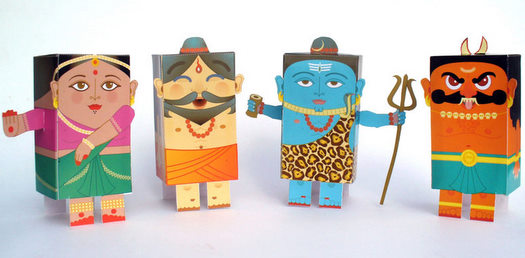
Smart, hip and desi, Masala Chai is a steaming cup filled with desi design wit. Check it out. Posts range from an intro to the stellar fold-your-own paper dolls of Mira Malhotra (shown here) to the Madhubani-folk-art-inspired paintings of Arti Sandhu. Respect.


A common sobriquet that describes Chinese Canadians with a job in Hong Kong and a home and family in Canada.

The term finds its provenance in the post-1997 phenomenon that saw many Chinese Canadian families set up homes in Canada while the main breadwinners returned to Hong Kong to earn their living.

Then, as now, it was often easier to find employment in one's country of departure (and certainly more lucrative), than to find an accepting and open-minded employer in Canada who was willing to accept your credentials and experience as valid, and willing to pay you equitably, on the basis of those qualifications.

At the same time the communist government in Beijing deployed several measures to reassure Hong Kong Chinese that it was business as usual in Hong Kong. Though no such promises were made in the area of political freedom, the fact that Hong Kong continued to prosper after the hand-over encouraged many Chinese immigrants to return.

Nonetheless, in a classic demonstration of circumspection so prevalent in Asian culture, they maintained their status as permanent residents or Canadian citizens. They also maintained their homes in Canada and, typically, sent their children to Canadian schools and universities, while they shuttled back and forth (hence the term astronaut - for the amount of time spent suspended above the earth).

It is estimated that 2/3rds of all male immigrants from Hong Kong live outside Canada according to a 2007 Vancouver Sun article quoting a study by the Chinese Canadian Historical Society of British Columbia.

And oh, the real Chinese astronauts - the guys who do the spacewalk - they're called taikonauts.


Image via NY Times, copyright: European Pressphoto Agency


Article: Creative Commons License 2008 Gavin Barrett
This work is licensed under a Creative Commons Attribution-Noncommercial 2.5 Canada License.


Indian English is being a bhelpuri language. It is being sweet and hot and tangy.

In a most excellent piece first published in 1987 in the New York Times, Steven Weisman (who was being the Times' New Delhi bureau chief), takes a big, big bite of this most zabardast dish. Please to try it by clicking on post title, and I am promising you will be coming back for more.

Shown above: the first ads in Indian English ever written in Canada. I was writing these while being employed at Vickers and Benson for Asian Television Network and Bell ExpressVu. The ads were attracting a readership of their own - and the kind publications were offering to carry a second round just like that only, for free! All gods are great I am saying!


Article and blog: Creative Commons License 2008 Gavin Barrett
This article is licensed under a Creative Commons Attribution-Noncommercial 2.5 Canada License.

This brilliantly wacky spot for Coke benefits from the fizzy mix of a Bollywoody dance sequence and bhangra homeboy Gurdass Mann's kickass delivery. Arre, chak de!

An outstanding report from the NYTimes.com, this video on a Pakistani business illuminates, surprises and challenges our preconceived notions of what Pakistan is, whether there is any tolerance in an Islamic context, while celebrating plain old chutzpah and entrepreneurship. It's a perfect piece for the crazy multicultural mosaic that is our world. A sublime bit of bizarre for the bazaar.


http://video.nytimes.com/video/2009/04/27/world/1194839708301/a-pakistani-underworld.html

The debate on Chinese script carries on in the pages of the NY Times. Eileen Cheng-yin Chow, professor of Chinese literary studies, Eugene Wang, professor of Asian art, Hsuan Meng, writer at World Journal Weekly and Norman Matloff, computer scientist all weigh in with their opinions and considerations. The score? All the experts prefer the ability of traditional script to capture nuances and subtleties but 3 out of 4 say that there is room for both. Read and enjoy the original article by clicking on the title of this post.


This bold, humanistic spot from Argentina goes where few North American banks dare to go.
Viva tolerance!


Article and blog: Creative Commons License 2008 Gavin Barrett
This article is licensed under a Creative Commons Attribution-Noncommercial 2.5 Canada License.
As a long-time poet and poetry promoter, I thought I'd use April - being National Poetry Month - to throw the powerful magic of poetry into the rattle-bag that is Bheja Bazaar. Besides, poetry and social commentary have always made excellent bedfellows. Here's an excerpt from the provocative Do Not Embrace Your Mind’s New Negro Friend by William Meredith. Click on the title to read the entire poem at at www.poetryfoundation.org.

“Do Not Embrace Your Mind’s New Negro Friend”

BY WILLIAM MEREDITH

Do not embrace your mind’s new negro friend
Or embarrass the blackballed jew with memberships:
There must be years of atonement first, and even then
You may still be the blundering raconteur
With the wrong story, and they may still be free.
...

Copyright © 1997 by William Meredith.
From www.poetryfoundation.org

Article and blog: Creative Commons License 2008 Gavin Barrett
This article is licensed under a Creative Commons Attribution-Noncommercial 2.5 Canada License.


A tip of the turban (literally) to fellow ad man, occasional employee and international Sikh Dalbir Singh. His Sikh Park cartoon series reminds us why this successful, industrious community is so much fun to hang with. They know how to laugh. At others and themselves. Vah, vah, vah. Keep it coming Sardarji!


Sikh Park, copyright Dalbir Singh. Via sikhpark.com


Article and blog: Creative Commons License 2008 Gavin Barrett
This article is licensed under a Creative Commons Attribution-Noncommercial 2.5 Canada License.


India just celebrated the incredible, colourful, uninhibited festival of Holi. Enjoy the The Boston Globe's photo essay on the festivities from its spectacular Big Picture website. And in the words of one billion revelers, "Holi Hai!"

Let go and let yourself have some fun.
Click here to see the photo feature.


Image: Makks2010 via weblink to from Wikimedia Commobes

Article: Creative Commons License 2008 Gavin Barrett
This article is licensed under a Creative Commons Attribution-Noncommercial 2.5 Canada License.


A beautifully executed series of peace posters featuring all 12 animals from the Japanese/Chinese zodiac.
Shown here, the Ox -it is the Year of the Ox after all. Enjoy. You can find the entire series here.


Image by Graflex Directions, via notcot.com

Article: Creative Commons License 2008 Gavin Barrett
This article is licensed under a Creative Commons Attribution-Noncommercial 2.5 Canada License.


Lord Leverhulme rather famously said "Half of my advertising budget is wasted. I just don't know which half."
And with that somewhat tautological statement, he set off a craze for measurement and ROI that has, to this day, not found a resolution.

Frankly, as a creative director and business owner I think it's a waste trying to identify the waste.

I would focus my energies and investment in trying to identify the other half, the half that works. Truth be told, even that will always be an imprecise science. In advertising and marketing, we are still wallowing in the quagmire of empirical limitation and search for validation in numerical or statistical evidence.

The human mind (and human behaviour) continues to be a source of astonishment to those who pursue a deeper understanding of it in a lifetime of study - anthropologists, psychologists, sociologists, neuroscientists. Our synapses and dendrites contain more information than a year's worth of tracking studies, focus groups and quantitative research.

None of them can truly account for or predict that undefinable moment when a creative act changes or defines a brand, its position in the market and its true value to its consumers. Think different (to borrow a phrase from a brand that did - and still does).


Article: Creative Commons License 2009 Gavin Barrett
This work is licensed under a Creative Commons Attribution-Noncommercial 2.5 Canada License.

Portrait of Lord Leverhulme by Augustus John, via link to Liverpool Museums website
Strategy = I think.
Tactics = I do.

Strategy = Analysis, planning, ideation.
Tactics = Mechanisms, activities, deployment.

Strategy - tactics = Einstein's brain in a jar.
Tactics - strategy = Einstein without a brain at all.

Strategy + tactics = e = mc(squared)


Article: Creative Commons License 2008 Gavin Barrett
This work is licensed under a Creative Commons Attribution-Noncommercial 2.5 Canada License.
Over on LinkedIn, a fellow member posted this question, and the answer I sent in might be pertinent to followers of this blog.

His question on Multicultural Agencies:
Does anyone have any experience working with (as a client) full service multicultural advertising agencies? What was your over-all experience? What were they good at? What were they not so good at? Any thoughts about how the over-all experience of engaging a multicultural agency could have been better?

My answer:
I am a principal/Creative Director at a very successful multicultural agency in Canada - one that is also a mainstream agency. Naturally I approach your questions with a somewhat different lens.

The development of multicultural work is fraught with difficulties.

I find too many multicultural agencies don't dive deep enough into the traditional rigour of good advertising and marketing practice to create insight-based work that is persuasive, engaging and relevant. The result, often, is work that is only one level above mere translation - with just a glimmer or two of culture sensitivity to justify its existence.

At the same time I can't exactly blame the agencies - clients too often want one-off ads - a token nod at the need to have something running in the multicultural market so that they are not conspicuous by their absence.

Operationally, clients frequently assign junior marketing staff to handle multicultural marketing functions independently without the guidance and steadying experience of senior marketers. Imagine how frustrating this can be.

One thing to be cautious of, is agencies that pretend to be more than they are. Hispanic agencies who swear that they can manage Asian American markets without an issue - or vice versa. Chinese market agencies who say they can handle South Asian markets - or vice versa. There are some that do, but these are few and far apart.

I would say to you that you should expect the same things from your multicultural agency as from your mainstream agency. Work of the highest strategic and creative quality for your market. People you can enjoy working with and can trust to deliver.

I would challenge you to provide the same things to your multicultural agency as you do your mainstream agency. Great, disciplined marketing briefs, the involvement and interest of senior marketing management, and the same respect for the process you give mainstream work.


Article: Creative Commons License 2008 Gavin Barrett
This work is licensed under a Creative Commons Attribution-Noncommercial 2.5 Canada License.


If you are celebrating the Lunar New Year, here's a simple wish from all of us at Barrett and Welsh: may the the Year of the Ox reward all your hard work with abundance and prosperity.


Article: Creative Commons License 2009 Gavin Barrett
This work is licensed under a Creative Commons Attribution-Noncommercial 2.5 Canada License.


A common sobriquet that describes Chinese Canadians with a job in Hong Kong and a home and family in Canada.

The term finds its provenance in the post-1997 phenomenon that saw many Chinese Canadian families set up homes in Canada while the main breadwinners returned to Hong Kong to earn their living.

Then, as now, it was often easier to find employment in one's country of departure (and certainly more lucrative), than to find an accepting and open-minded employer in Canada who was willing to accept your credentials and experience as valid, and willing to pay you equitably, on the basis of those qualifications.

At the same time the communist government in Beijing deployed several measures to reassure Hong Kong Chinese that it was business as usual in Hong Kong. Though no such promises were made in the area of political freedom, the fact that Hong Kong continued to prosper after the hand-over encouraged many Chinese immigrants to return.

Nonetheless, in a classic demonstration of circumspection so prevalent in Asian culture, they maintained their status as permanent residents or Canadian citizens. They also maintained their homes in Canada and, typically and sent their children to Canadian schools and universities, while they shuttled back and forth (hence the term astronaut - for the amount of time spent suspended above the earth).

It is estimated that 2/3rds of all male immigrants from Hong Kong live outside Canada according to a 2007 Vancouver Sun article quoting a study by the Chinese Canadian Historical Society of British Columbia.

And oh, the real Chinese astronauts - the guys who do the spacewalk - they're called taikonauts.


Image via NY Times, copyright: European Pressphoto Agency


Article: Creative Commons License 2008 Gavin Barrett
This work is licensed under a Creative Commons Attribution-Noncommercial 2.5 Canada License.


Asian American is a catch-all phrase that covers Americans whose origins are East Asian (Chinese, Japanese, Korean), South Asian (mostly Indian, and to a lesser extent Pakistani and Bangladeshi), South-East Asian (Vietnamese and Philipino, and to a lesser extent Thai, Malaysians, Indonesian, Cambodian and Laotian). The idealized definition, would simply be all Americans of Asian origin.

However (and rather interestingly), West Asians (Turkish, Persian and Arabic-speaking peoples), are not typically included in this group, in popular usage. (Perhaps it's not that catch-all in the end?)

The phrase Asian American enjoys preferred use by the US multicultural marketing industry, which tends to use it to separate and simplify the two main multicultural markets thus: Hispanic and Asian American. In Canada, where the Hispanic market is still relatively small, and where familiarity with the disparities between the various Asian ethnicities is high, there is no such grouping; the closest would be the term visible minority.

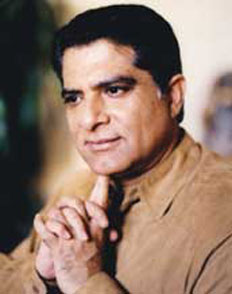
Some famous Asian Americans (ethnic origin in parentheses) are: Governor Bobby Jindal (Indian), Yahoo founder Jerry Yang (Chinese), NBC news anchor Connie Chung (Chinese), Dr. Deepak Chopra (Indian).

Deepak Chopra image, via nndb.com
Jerry Yang image, via businessweek.com

Article: Creative Commons License 2008 Gavin Barrett
This work is licensed under a Creative Commons Attribution-Noncommercial 2.5 Canada License.


After writing some 10,000 words in this blog, I thought I'd like to see how one of my favourite web services handles the content. Wordle, as some of you may know generates these elegant dense tag clouds of any content input by you. I input 9999 words - I think the limit is 10,000. This is what I got. Some observations: though I think I've covered the South Asian and Chinese communities equally, Wordle has split South and Asian, so the resulting cloud shows a bias towards Chinese coverage, which isn't the reality of course. (Hmm, lies, damned lies and tag clouds?!)

http://www.wordle.net/
Images of Wordles are licensed


Article: Creative Commons License 2008 Gavin Barrett
This work is licensed under a Creative Commons Attribution-Noncommercial 2.5 Canada License.
It's a bloody shampoo, it's not rocket science!
Out with moisturizing molecules and herbal hairballs in all their CGI splendour!
In with frogs, mmmuahh! 


A tip of the turban to Dan Nainan, for his multiracial, multicultural, self-deprecating comedy. Some neat insights into how we're all different. And more importantly, how we're all the same.


An entertaining take on the major hindu deities. Hindu calendar art meets Stan Lee. Nicely done, and defended by the designer - especially if you understand the simplistic, anti-plural, homogenizing viewpoint of Hindu fundamentalists (oh, the irony! - that this aberration should appear in a religion of 330 million gods). (the screensavers are nicer than the T-shirts.)
East Indian

This extremely irritating (to Indians) term was in common use in Canada and in North America as recently as 1996.
It has fallen into relative disuse but still pops up disconcertingly, from time to time in newspapers or government documents. Its connections to the East India Company's bloody sojourn in India and its direct descent from the world's greatest case of mistaken identity (Columbus declaring his discovery of the Indies) make it unpalatable to the Indian tongue.
Acceptable alternatives are Indo-Canadian or Canadian of Indian origin - if the person or persons described originated from India. The term South Asian is also acceptable though it does not denote Indians exclusively.


Article: Creative Commons License 2008 Gavin Barrett

Creative Commons License


This work is licensed under a Creative Commons Attribution-Noncommercial 2.5 Canada License.
Is multicultural creative getting better?
Or is it merely going downhill fast?
This new commercial for Nationwide Insurance aimed at South Asians in the US is simply not good enough.


Indian English is English with a smattering of Hindustani - and other Indian languages - as the need of the speaker demands.

Hinglish is Hindustani (itself a hybrid of Hindi and Urdu) with a smattering of English.

That's my preferred distinction, and it's the one the Oxford Dictionary folks used to prefer.

It dismays me no end to hear the two used interchangeably, so here is an additional guide.

Indian English is India's English - the Maharani's English if you will. An exotic, richly spiced vibrant variant of the mother form, Indian English is recognized by the Oxford Dictionary. Populated as it is with an aromatic vocabulary of Indian words and quaint, rare and uniquely subcontinental English usage, it is to English what Masala Chai is to tea.

Hinglish on the other hand, being predominantly Hindustani, would be perfectly sensible if written in Devanagari script though it never is. Its quirkiest idiosyncrasy - its defining characteristic - is that it is at heart, an Indian language written fully in Roman script.

Indian English for its part, is mostly English in vocabulary and grammar albeit in a form not always recognizable to Her Majesty.
Imagine this: it's 1936, and a visiting Home Office envoy extends his pinkie, sips his Earl Grey and complains in a tone of mild horror, "My dear boy, it came here as the Queen's English but it's gone dreadfully native, hasn't it?"
Well, the reality is that it has gone wonderfully native; polyglottal India has made Indian English a truly Indian form of self-expression.
Yet, it would be nigh impossible to write Indian English in anything but Roman script.
Indian English is one of the many reasons English can claim more than half a billion speakers.

Here's a line in Indian English.
Hello sir! How is your health keeping? Auntyji is also being okay?


Here's the same line in Hinglish:
Namasteji. Aap teek hain? Aur auntyji?

For a fascinating linguistic journey through this young, extremely dynamic variant of English, click on the links below and hold on to your topees. (And at some point I promise, I will write a post on Indian words that English borrowed - hold on to your pyjamas for that one).

Click here to enjoy the BBC's take on Indian English.

Or here to read a rather thorough linguistic analysis in Wikipedia.

Or enjoy perusing the entertaining Dictionary of Indian English here.

Image via desicreative, by typographer Nabina Ghosh.

Article: Creative Commons License 2008 Gavin Barrett

Creative Commons License


This work is licensed under a Creative Commons Attribution-Noncommercial 2.5 Canada License.


Many people mistakenly use Hinglish as synonymous with Indian English - but like others who approach this linguistically I beg to differ.

There are many different descriptions for this hybridized language. This is mine - as a student and teacher of literature and language (especially in the subcontinental context), I feel compelled to take a more formal approach.

Hinglish is predominantly Hindi or Hindustani written in Roman or English script. When spoken or written, it is driven by phrasings and constructions written or driven by Hindi.


A paragraph of text written in Hinglish may be peppered with English words - especially such terms or concepts as "mobile" or "weekend" or "internet" - in this it does have commonalities with Indian English but the dominant Hindi movie titles are typically written in Hinglish - as in the example shown here. Hinglish and Indian English are both commonly used in advertising in India.

But for obvious reasons (its Indo-Aryan Hindi origins, Hinglish simply doesn't travel as well as Indian English does). Perhaps the best distinction between Indian English and Hinglish is summed up as follows:
an educated Keralite or Tamilian whose mother tongue is an Indo-Dravidian language, would not be able to follow or understand the Indo-Aryan linguistic and syntactical choices made by a Hinglish speaker.
Whereas both would understand Indian English perfectly - inserting words from their own languages into a syntax that is essentially Anglophonic.

Bollywood poster image from http://www.oldindianarts.in/
Article: Creative Commons License 2008 Gavin Barrett

Creative Commons License


This work is licensed under a Creative Commons Attribution-Noncommercial 2.5 Canada License.
ABC is an acronym for American Born Chinese. It has much the same provenance as CBC or Canadian Born Chinese, and has similar pejorative nuances depending on the circumstances in which it is used.


Article: Creative Commons License 2008 Gavin Barrett

Creative Commons License


This work is licensed under a Creative Commons Attribution-Noncommercial 2.5 Canada License.
A CBC is a somewhat less than complimentary acronym for Canadian Born Chinese. CBCs themselves often refer to more recent Chinese with the pejorative FOB (Fresh Off the Boat). Many CBCs do not speak Chinese and are often in conflict with their roots as they try to define their own place in the Canadian multicultural landscape. Some CBCs may even be bananas but not all bananas are CBCs. A large portion of Gen2 Chinese are CBCs. From an ethnographic perspective, CBCs have a great deal in common with ABCs - their cousins south of the border - than just a couple of initials.


The CBC logo shown above is a trademark of the CBC (the Canadian Broadcasting Corporation)

Article: Creative Commons License 2008 Gavin Barrett

Creative Commons License


This work is licensed under a Creative Commons Attribution-Noncommercial 2.5 Canada License.
You've seen the print ads, and read the hype (in my earlier post on Bheja Bazaar).

Now take a look at the TV spot. Remember, this is 1990 we're talking about. It's worth a laugh if nothing else. Click here to see the spot at agencyfaqs.com


Aamir Khan stars as the new spokesperson for Titan Watches, India's biggest watch brand. Unlike many other Bollywood stars, Aamir Khan is a real actor. A well crafted script + a well crafted spot = a great celebrity endorsement.

Not Cannes territory but a whole lot better and smarter than Aish in L'Oreal's formulaic blather, breathtakingly beautiful though she is.


I'm torn.
Here's a brand new campaign from At&t advertising its global roaming capabilities. I've been watching it unfold in the pages of the New York Times over the last few weeks.

It's beautiful, visually lush.
I believe it is a precursor to multicultural advertising of the future; i.e., it is cross-cultural and therefore, truly multicultural.
At the same time, it picks up cues, graphics, icons, that are specific to individual cultures/locations.

That's the good part.

The bad part: where's the insight?
This is not a multicultural campaign of course, but to be honest it fails utterly despite the stunning art direction.
A campaign for global coverage running in the US is surely targeted at global travelers from the US visiting or working in the world's largest countries and fastest growing economies.

C'mon guys. It should have hit you like a brick.
The sum of all things Chinese is not the Great Wall.

India is not all caparisoned elephants or the Taj Mahal.

You have to rise above those hackneyed images.
Get with the times, cause they're a-changin'
Why do people want better coverage in India or China?
Because they're doing business there.

Think Shanghai, not the Great Wall.
Think Mumbai or Bangalore, where the money is made and your software is written.
Find a symbol that isn't the same damn symbol that everyone has ever used.

This campaign probably starts in some feebly educated American mind, wherein the rest of the world must be reduced to cliches, so as to effectively communicate with other feebly educated American minds.

No? Am I oversimplifying?
Have I offended some American friend or colleague who resents my generalization, and doesn't like me reducing Americans to a cliche?

Ads via Ads of the world.
Article: Creative Commons License 2008 Gavin Barrett

Creative Commons License


This work is licensed under a Creative Commons Attribution-Noncommercial 2.5 Canada License.


A while ago I promised I would feature great ads on this blog from the major multicultural "home markets".
By that, I meant ads from India, Hong Kong and China to start with. Ads that show exactly how high the bar is in those markets and how sophisticated those audiences are. The Nike ad from JWT India I posted a while ago is a good example.

Now, my kid brother Russell (he's a Creative Director/Writer at Leo Burnett Mumbai) has given me more material for the series.

A campaign of his for Luxor highlighters won 2 Gold Lions and 3 Bronze Lions at Cannes and a One Show Gold pencil to boot.
And a NY Art Director's Gold, and 2 Silver Andys...
And got into the D&AD annual - which is surely the toughest award show in the world to crack.

Is it multicultural in any way? No.
Does it exploit an insight into the way Indians use highlighters? No.

I'm sharing it simply because it's a great campaign with a great idea behind it, and it truly demonstrates the power of the product. Nothing more, nothing less. Nothing else matters.

Enjoy the ads.


Article: Creative Commons License 2008 Gavin Barrett

Creative Commons License


This work is licensed under a Creative Commons Attribution-Noncommercial 2.5 Canada License.
Bollywood is a phrase the west uses to refer to Indian movies, though in reality it only applies to movies from Bombay (now Mumbai) - hence Bollywood.

Bollywood is Singing In the Rain meets Indiana Jones. In a Bollywood movie, the good guy beats the bad guy and always wins the girl and gyrates through some pretty difficult (for Westerners) dance sequences along the way.

Bollywood is an escape from reality as is almost every other kind of movie out of India's massive film industry. It’s the largest film industry in the world because it allows a billion people a way out from the everyday struggle of their lives – three hours of fantasy.

Movie plots are fairly easy to predict.

A low-caste boy with a heart of gold falls in love with a rich upper-caste girl and they have a secret wedding. And the movie is their love story.

Or it’s about an unlikely hero who fights against the tyranny of a local feudal landowner with the help of the simple feisty village girl he loves. There’s never any sex, and in most movies there’s not even any kissing. However there’s an awful lot of sexual tension.

Or it's about twins or siblings separated at birth and raised by others. One grows up to be a rich underworld don and the other becomes a poor, idealistic cop. They battle to the death before the eyes of their distraught birth mother who finally tells them they are brothers as she herself dies thanks to a ricocheting bullet (after at least six song and dance numbers mind you).

Sure these premises are kitschy. But the movies are made and watched with a great deal of affection. People even throw money at movie screens when they watch a scene with some great dialogue or get right into a song-and-dance number.

The music from Bollywood is India’s pop music and great lines of dialogue enter everyday speech. (think "Luke, I am your father.").

Bollywood characters are clichés, stereotypes. Bollywood acting is usually over-the-top and campy.

The key characters are usually The Hero, The Heroine, The Vamp (the bad/villain’s girl with a heart of gold), The Villain (who has no redeeming features), The Daku (trans: the Bandit, or the villain’s henchman), The Jester/Sidekick (usually provides comic relief to the hero.)

The advertising for Bollywood movies is as gaudy, loud and melodramatic as the movies.

Article: Creative Commons License 2008 Gavin Barrett

Creative Commons License


This work is licensed under a Creative Commons Attribution-Noncommercial 2.5 Canada License.


What are those motivations?

Multicultural marketing is even more critical for grocery stores because food is central to the lives of S Asians and Chinese.
Among Canada's other immigrants groups, only the Italians and Portuguese place similar emphasis on food, and on meals.

S Asians are heavy eaters and have large, multi-generational households - they buy groceries in large amounts.

Among S Asians and Chinese alike, meals are family affairs, rituals that mark the gathering of elders and children.
Meals are rarely eaten front of a TV. Children are taught to never waste, to respect their elders at the table, to treat the food itself with respect.

Recipes are inherited and passed down, generation to generation.
Short-cuts in cooking (like mixed frozen veg.) are tolerated as a guilty convenience but meals from a box or TV dinners are completely verboten.

And while both groups may be budget-conscious, food is invested with a cultural significance beyond its nutritional value.

When I lived in Hong Kong, a common Cantonese greeting was "sic fan?" which is akin to saying "have you eaten?" because if you've eaten, then surely you're doing fine.

There's so much more. There's food-lore and foods for rituals and cultural understanding of family structure - all of it food-centric.
Then there's what I call the "value families/family values" phenomenon - these are budget conscious food-savvy consumers who know how to buy quality fresh foods using taste, smell, heft and family knowledge, and for them, placing an excellent (not just adequate) meal on the table is paramount.

It's a shocking mistake on the part of grocery stores to delay or avoid communicating with this market any longer.
The first movers will win a loyal following.

It's the reason why T&T has been so successful - the Chinese consumer was ignored for so long by the big grocers - and T&T is the real deal, a genuinely Chinese supermarket chain.

My advice to grocery stores would be, "speak now or forever lose your piece of the pie-chart."

A 2006 study (I think from Manifold Data Mining) showed that S Asians in Toronto spent $12.6 billion on retail goods and services and the Chinese spent $12.3 billion.

In terms of purchasing power that's pretty hefty clout.

Add to that the fact that by 2017 about half of all visible minorities in Canada will be either S Asian or Chinese according to Stats Can and these markets suddenly aren't merely impressive, they're critical for business.

Maybe it's time the grocery stores went shopping - for better ideas, and better ways to connect with the new Canadian consumer.

Food for thought for food.

Burp.


Photography by Desi Zavatta Musolino, via Flickr.
Article: Creative Commons License 2008 Gavin Barrett

Creative Commons License


This work is licensed under a Creative Commons Attribution-Noncommercial 2.5 Canada License.

I was talking to Marina Strauss, the Globe and Mail's retail reporter just the other day, and we circled around for quite a bit trying to identify what the issues were with the marketing of grocery stores to multicultural markets.

As is typical, the lightbulb went off much later.
The issue is that there is none.

I think first of all the major grocers are doing very little other than bowing to the demographic realities of multicultural Canada and stocking ethnic foods on their shelves. They have no choice. It is simply good business to do so.

Those are market dictates and if they sold no ethnic foods, well someone else would do so and take that business away.

Whether you go into lower end stores like No Frills or Food Basics or into a Loblaws or Dominion (more on that later in this post), you will find ethnic or international aisles.

In a No Frills or Food Basics, you can be sure that the main focus is the ethnic or multicultural customer.

However, very little is being done to communicate that these S Asian and Chinese foods are available to those markets.

That's like a bank offering retail-level service in Punjabi or Cantonese, but keeping it a secret from their Punjabi and Cantonese customers - TD Canada Trust would never do a thing like that - they take some pains to let their customers know that such a product/service exists.

That's why they are consistently rated the top bank in the multicultural market - not just because they offer a product or service but because they take the trouble to communicate and carve a clientele for themselves; as a result, they don't just have a share of the market, they lead it.

When there has been an attempt to advertise directly to these markets, the low-end stores have tried to do it on the cheap.
It's why huge mistakes occur - mistakes like a TV spot marketing specials on beef (offends Hindus), pork (offends Muslims) and cranberry juice (is not on a S Asian's grocery list at all) to a S Asian audience on Omni.

It sounds unbelievable, but it's true.

In higher end stores, ethnic food aisles exist mostly for hip Caucasians who have adventurous palates - it's like the "world music" section at a music store. Yes, some S Asians and Chinese shop there but most shop at No Frills or Food Basics (there is new research from Solutions Research Group that confirms this, Marina tells me).

Furthermore, most of the marketing/advertising in a higher end store - say of Loblaws new PC butter chicken meal is aimed at Caucasian Canadians and largely delivered through flyers. Guess what language those flyers are in - yup, it's my own weapon of choice: Ye Olde Anglo-saxon.

There is little or no effective marketing or advertising to the two largest and most important (in terms of purchasing power too) visible minority markets: South Asians and Chinese.

Why? Partly because few self-respecting South Asian families would buy a meal in a box - those cool butter chicken and chicken tandoori meals are really meant for the Anglophone Indophile. It's pretty much the same for Chinese food and the Chinese audience.

So if the exotic-menu-meals-in-boxes aren't right for South Asian and Chinese palates, should Loblaws and Dominion and Sobeys start marketing to S Asians and Chinese? Absolutely. They need to buy apples and oranges and rice and milk and eggs like every one else. They just do it in different ways and with different cultural motivations and marketers at those stores would do well to begin figuring out how to connect and activate those motivations.

What are those motivations? More on that in my next post.


Photo by Pinprick/Amanda via flickr.
Article: Creative Commons License 2008 Gavin Barrett

Creative Commons License


This work is licensed under a Creative Commons Attribution-Noncommercial 2.5 Canada License.

Popular Posts

Copyright Gavin Barrett. Powered by Blogger.

Plagiarism Watch!

Protected by Copyscape DMCA Copyright Protection